Reconductoring Boom Puts Shared-Corridor Pipelines on Alert
America's fastest route to more transmission capacity may run straight over other people's pipelines. Reconductoring, which swaps legacy conductors on exis
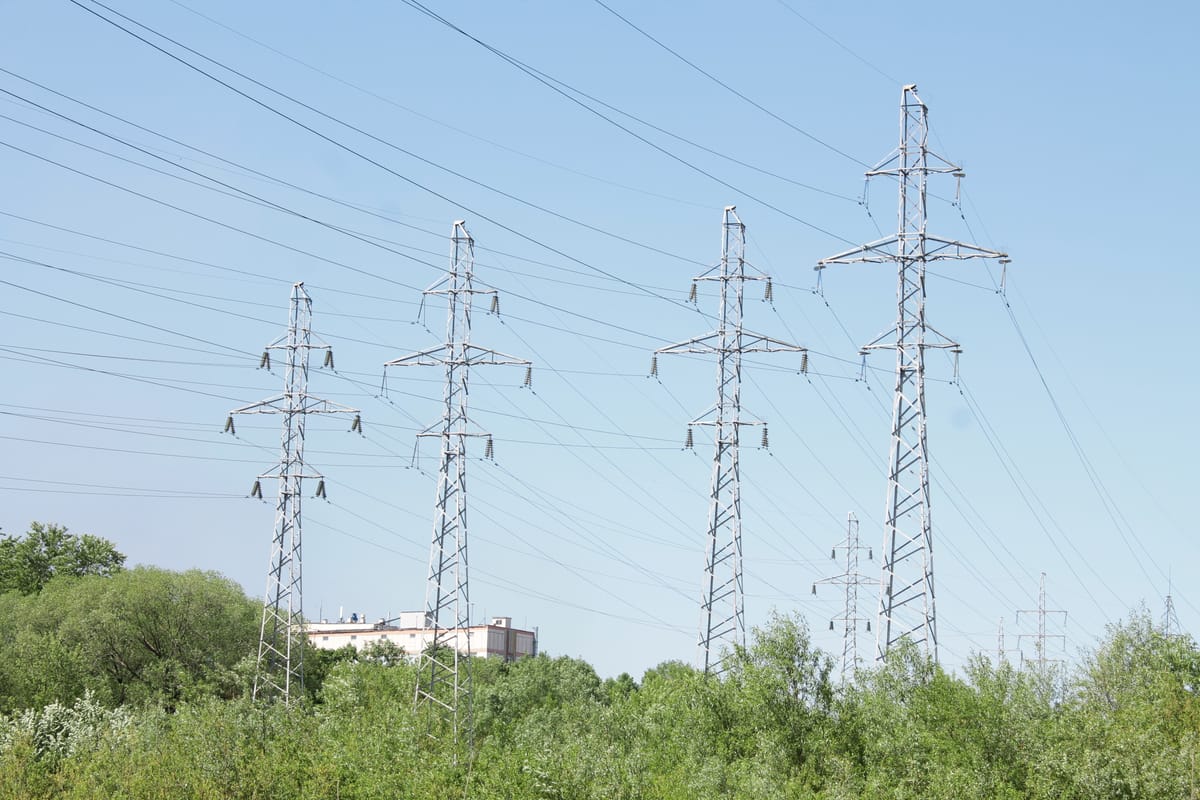
America's fastest route to more transmission capacity may run straight over other people's pipelines. Reconductoring, which swaps legacy conductors on existing towers for advanced ones, can lift a line's rating by 50 to 110 percent within 18 to 36 months without claiming new land. But many of those rights-of-way already carry buried oil and gas pipelines, and the higher currents of an upgrade change the electrical environment around that steel. As federal money accelerates the trend, a power line's gain can quietly become a pipeline operator's problem.
The pace is set to quicken. September 2026 brought a Department of Energy commitment of 1.9 billion dollars across 31 SPARK projects; with sponsor contributions near 3.4 billion dollars, the package targets more than 1,500 miles of high-voltage AC rebuilds plus grid-enhancing technologies over roughly 21,000 further miles, adding some 23 GW on existing corridors. GridLab's 2024 analysis suggested reconductoring could deliver close to four times the capacity of new construction by 2035 where land is constrained. Salt River Project proved the economics in 2024, re-rating an 8.5-mile, 230-kV Phoenix-area circuit about 80 percent higher in 18 months on 1970s-era towers.
Tim Gonzalez, vice president of energy integrity solutions at the Association for Materials Protection and Performance, laid out the consequences. Induced alternating current endangers crews first: NACE SP0177 treats 15 V AC as the steady-state touch-voltage limit, and IEEE Std 80 governs fault-condition exposure. Metal loss is subtler: a 2015 DNV GL study for the INGAA Foundation warned the safety threshold says nothing about corrosion, ISO 18086 instead weighs current density at coating holidays, where a small defect can discharge into the soil and accelerate attack even when voltage readings look benign. Under 49 CFR 192.473(c), gas transmission operators must run interference surveys when stray-current sources appear, with a remedial action plan once density reaches 100 A/m2. Southern California Edison held its Eldorado-Lugo-Mohave upgrade below full rating until SoCalGas mitigation was done, and Puget Sound Energy pre-modeled its 16-mile Energize Eastside corridor against two adjacent petroleum pipelines.
What It Means for Valve Stations and Buried Steel
For valve and piping engineers, shared-corridor reconductoring is less a headline than a work-scope change. Valve stations, tie-in assemblies and casings are where induced AC concentrates: coating holidays at field joints, bonded steel contacts and test posts tied into grounding systems. Every such project generates concrete procurement: gradient-control wire and grounding cells trenched along the right-of-way, solid-state decouplers at cathodic-protection connections, extra test stations and AC corrosion coupons at exposed structures, and revised bonding at above-ground valve assemblies. Coating quality climbs the specification list, because current density at a defect, not the voltage a crew reads, corrodes steel, and 100 A/m2 becomes a remediation trigger rather than a theoretical limit. Timing matters most: mitigation hardware is usually needed before re-energization, and pre- and post-energization surveys define the punch list. Operators who model interference jointly, as SoCalGas did with Edison, convert a neighbor's upgrade into a budgeted scope; those who wait for notice invite rework.