Wastewater Treatment Valves: Sludge, Scum, and Grit Service
Valve selection for wastewater treatment plants — sludge and scum lines, grit service, knife gate and pinch valve advantages, H2S corrosion, biogas area safety, and maintenance practice.
Wastewater Treatment Valves: Sludge, Scum, and Grit Service
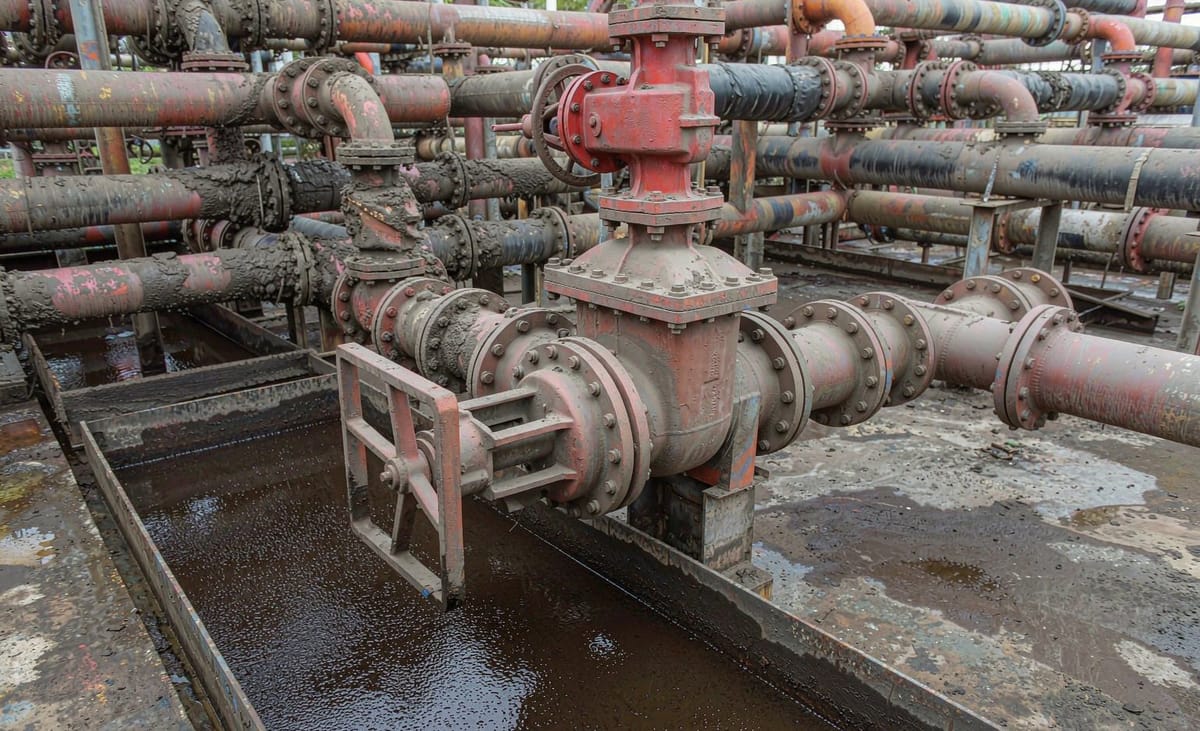
A wastewater treatment plant looks, from a distance, like a simple collection of tanks and pipes. Up close, it is one of the most punishing valve environments in any utility. The liquids range from screened raw sewage to clarified effluent, but the hard service is elsewhere: thickened sludge that behaves like a paste, scum that floats and cakes on every dead surface, grit that sandblasts internal parts, and biogas that is corrosive, wet, and explosive in combination. Valves in these services fail for reasons clean-water practice never anticipates; the plants that run trouble-free are those whose valve specifications respect what the media actually does.
What Each Stream Demands
Four streams dominate the valve list in a conventional activated-sludge plant, and each has its own character:
- Primary sludge — the settled solids from primary clarifiers, typically pumped as a thick, heterogeneous slurry containing fibers, rags, and grit that passed the screens. It is abrasive, stringy, and settles out in any line that stops.
- Secondary or waste activated sludge — thinner and less gritty, but rich in stringy floc that clogs narrow passages and wraps around mechanisms.
- Scum — the grease and floatable fraction skimmed from clarifier surfaces. It congeals on cooling, coats seats, and packs body cavities until closures jam.
- Grit — separated sand and heavy inorganic particles, usually handled as a slurry from aerated grit chambers or cyclones. This is the most abrasive stream on site, comparable in wear to mine tailings.
- Biogas — the methane and carbon dioxide mixture from anaerobic digestion, saturated with moisture and carrying hydrogen sulfide. It is a gas service with chemical-plant corrosion and the hazard classification of a fuel system.
Solids and Fibers: Where Knife Gates and Pinch Valves Win
The defining requirement in sludge and grit service is the ability to pass solids, cut through fibers, and seal after contact with stringy material. Conventional globe and butterfly valves with reduced or obstructed flow paths are poor matches. The designs that dominate:
- Knife gate valves — a thin blade that slices through the media and seats against the body. Wafer or lug bodies with short face-to-face and a full, unobstructed port pass rags and fibers that would jam a wedge gate. Bidirectional resilient-seated designs seal well on diluted sludge; metal-seated designs with deflectable cones handle grit-laden service and hot digestion applications.
- Pinch valves — a flexible elastomer sleeve that is compressed to close. The media touches only the sleeve, there are no seats to clog and no cavities to pack, and the full-round bore gives near-straight-through flow. For sludge, scum, and grit slurry, the pinch valve is often the lowest-lifetime-cost choice, with the sleeve as its only wear part.
- Ball valves in full bore on digester and biogas lines where tight shutoff is needed in gas or thin liquid service, provided body cavities are flushed or avoided.
The control valves used for sludge flow throttling follow the same logic: pinch valves and ball valves with segmented or V-port balls are preferred over globe valves, whose tortuous passages clog quickly on fibrous media.
Odor and Corrosion: The H2S Problem
Hydrogen sulfide is the silent destroyer in wastewater plants. Generated by anaerobic bacteria in the collection system and at the plant, H2S gas in the headspace of structures oxidizes on damp concrete and metal surfaces to sulfuric acid. The result is microbiologically influenced corrosion that eats carbon steel handwheels, yokes, bodies, and bolting in humid areas — even where the valve never touches the wastewater itself.
Defenses that work:
- Adequate alloy choice for the environment, not just the media: epoxy-coated or stainless bodies in humid headspace areas, stainless or coated bolting everywhere, and no bare carbon steel components exposed in enclosed corridors.
- Ventilation and odor control reduce the attack rate, but never eliminate it — coatings and alloys must assume a corrosive atmosphere.
- Elastomer compatibility matters: the sealing materials in contact with the liquid must tolerate sulfides and the fats and surfactants present in raw sewage.
- Coating quality on buried and submerged valves — fusion-bonded epoxy on bodies and stems' protective boots — is a specification item, not an option, because coating holidays become the corrosion initiation point.
Biogas Area: Explosion Protection and Tightness
Biogas with a methane content well above the lower explosive limit makes digester gas handling a classified-area problem. Valves in biogas service must satisfy several requirements at once:
- Actuated and electrical equipment in the zone must carry hazardous-area certification appropriate to the plant's zoning study.
- Tight shutoff matters for safety, not just process: isolating a digester or flare header requires bubble-tight closure, which favors soft-seated ball and plug valve designs where temperature permits, or metal-seated designs with verified seat classes.
- Flame arrestors, pressure relief, and the valve arrangement around digesters follow the plant's gas safety philosophy, and manual valves must be lockable in position.
- Condensate in biogas lines combines with H2S to form weak sulfuric acid; low-point drains and material choices on gas valves must account for the wet, sour condition, not the dry gas on the datasheet.
- Actuated valves on digester and flare systems need documented fail positions and stroke testing intervals as part of the plant's safety review.
Flushing and Clean-Out Design
Lines that carry settleable solids need the ability to be cleaned, and valves must fit into that plan:
- Provide flush connections so sludge mains can be pushed with plant water after batch transfers, reaching valves at dead ends.
- Prefer valves whose bodies leave nothing to clean out — pinch valve sleeves and full-port knife gates are inherently self-clearing when the line flushes.
- Scum lines benefit from heated or insulated runs and valves that can be flushed with warm water, because congealed scum is the hardest material on site to remobilize.
- Grit lines need velocity maintained at all times; valves that create local velocity drop become settling basins and then abrasive plugs.
Rising Versus Non-Rising Stem
Stem choice on gate and knife gate valves is a practical decision in wastewater service. Rising stems show valve position at a glance and keep the stem threads outside the media, which is essential in sludge where threads in contact with solids seize quickly. Non-rising stems save headroom in buried installations, but their threads run in the media unless protected; a protected, greased non-rising stem with a sealed thrust bearing is the minimum acceptable arrangement. In humid, corrosive above-ground galleries, rising stainless stems with protective covers are standard, because position indication and thread preservation both matter.
Maintenance Frequency and Spares
Wastewater valves live or die by maintenance access and spare stocking:
- High-cycle valves — scum skimmer valves, digester transfer valves, aeration isolations — need actuated operation and quarterly stroke checks; manual operation at low frequency invites seizure.
- Pinch valve sleeves and knife gate seats are wearing parts: stock them for every size in continuous service.
- Inspect buried and submerged valves on a schedule driven by operation, not hope — an unexercised sludge valve is a frozen one.
- Keep gearbox and actuator spares matched to the plant's population, and record each valve's last operation date.
- During dewatering of tanks, take the opportunity to internally inspect the valves that were isolated — grit and fiber wear is invisible from outside.
Selection Checklist
Before finalizing valves for a wastewater plant, confirm:
- Stream character for each line: sludge solids content, grit load, scum tendency, gas or liquid.
- Closure type suited to fibers and solids: knife gate, pinch, or full-bore rotary — never an obstructed globe body on sludge.
- Materials and coatings rated for the H2S atmosphere, including bolting and handwheels.
- Hazardous-area compliance for all powered equipment in biogas zones, with documented fail positions.
- Flushing provision and clean-out access for solids-bearing mains.
- Spares strategy covering sleeves, seats, packing, and actuation for the high-cycle population.
Choosing with Manufacturer Support
Wastewater service rewards straightforward, solids-tolerant designs specified with an understanding of each stream. An experienced manufacturer that produces the full valve range in-house — ball valves, control valves, gate valves, globe valves, check valves, strainers, knife gate valves, plug valves and butterfly valves — can review each stream at the plant, match closure types to media character, and document materials and coatings for the corrosive atmosphere. Send the Valve Schedule or the key parameters for each position to the manufacturer's applications team for a per-line proposal.