Common Myths About Valve Pressure Ratings, Corrected
Class 300 is not a pressure at any temperature, PN does not convert to Class, and the body rating is not the valve rating. The pressure rating myths that cost projects real money.
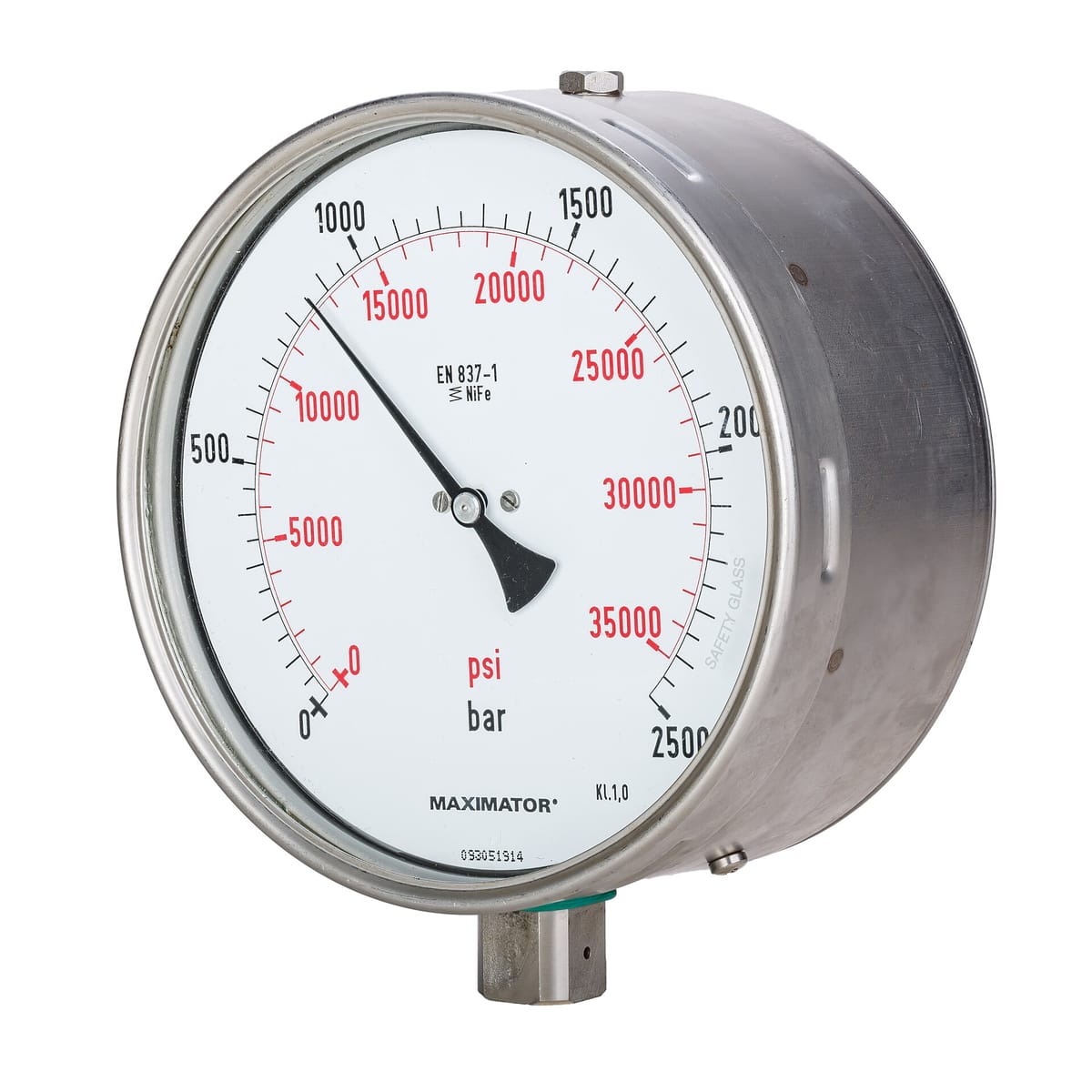
Pressure ratings look like the simplest thing about a valve. A number, a class, done. In practice, ratings are where some of the most expensive selection errors hide, precisely because everyone thinks they understand them. The myths below circulate in procurement departments, on construction sites, and occasionally in engineering offices, and each one has a failure mode waiting behind it.
Myth: A Class 300 Valve Handles Its Nameplate Number at Any Temperature
The most stubborn myth in the business is that a Class 300 valve is good for some fixed pressure everywhere and always. Pressure classes define rating tables, and those tables derate with temperature. A valve in a typical carbon steel body may carry a rating near its class maximum at ambient conditions, but at steam-line temperatures the allowable pressure is meaningfully lower, and at elevated temperatures it drops further still.
The classic scene plays out like this: a steam service gets sized against the cold rating, the valve passes receipt inspection, and the discrepancy only surfaces when someone finally cross-checks the rating table at operating temperature — often during a documentation review, or worse, after a flange starts weeping during startup. The fix is not clever engineering; it is the habit of reading the rating at the operating temperature, every time. The rating tables exist in the standards for exactly this purpose, and every serious manufacturer publishes equivalent data. If nobody on the team checked the temperature column, the selection is not finished.
Myth: PN and Class Are Two Spellings of the Same Thing
PN ratings and ASME classes come from different standards, different material groups, and different rating philosophies. There is broad, approximate overlap in the middle of the range — people will tell you that a given PN rating is "roughly" equivalent to a given class, and at ambient temperature with common materials, the rough equivalences mostly hold. Roughly is the word doing all the work in that sentence.
The trouble starts when the approximation gets treated as a conversion. Two flanges that mate dimensionally can still have different allowable pressures at temperature, because the rating tables behind them differ. A pipeline specified in one system, with valves ordered "equivalent" in the other, can end up with the weakest link being whichever component was rated by folklore rather than by table. If your project genuinely mixes systems, someone qualified should map every interface explicitly, component by component, instead of trusting a conversion chart taped inside a procurement office.
Myth: Design Pressure Equals Operating Pressure
On paper, these are defined differently, but the myth survives because the distinction rarely matters — until it does. Design pressure is the maximum the system is designed to contain, including margins and upsets. Operating pressure is where the system actually lives. Specifying a valve against the operating pressure because "the line never goes that high" is a direct route to a component that is correct for a typical day and inadequate for the day the control loop fails, or the block valve closes against a running pump.
The mirror-image mistake is also real: taking the design pressure and ignoring temperature coexistence. Design pressure and design temperature rarely occur simultaneously, and the governing condition for a valve may be a moderate pressure at a high temperature rather than the peak pressure at ambient. Good specifications state the coincident conditions, not just the two peaks. If your datasheet lists pressure and temperature as independent maxima with no note on coincidence, ask the question before ordering, not after FAT.
Myth: Same Size, Same Rating, So It Interchanges
Two valves of the same nominal size and pressure class look interchangeable on a requisition line and can be anything but. Rating defines the pressure-containing envelope, not the suitability of everything inside it. A soft-seated ball valve and a metal-seated one can share a class and differ completely in temperature capability and leakage behavior. A gate valve and a globe valve in the same size and class are not swappable in either direction, for reasons that have nothing to do with ratings and everything to do with flow direction, pressure drop, and seat design.
The scenario this myth produces is familiar: a replacement is ordered by size and class alone, it arrives correct on paper, and it fails or underperforms on commissioning because the seat, trim, or body style never suited the service. The rating was never the problem. Rating is one filter among several, and treating it as the whole specification is how wrong valves end up with the right paperwork.
Myth: the Body Rating Is the Valve Rating
This one deserves its own section, because it hides inside otherwise careful specifications. The pressure class printed on the flange describes the body and the end connections. It does not describe the assembled valve. Seats, seals, packing, stem design, and for automated valves the actuator and accessories, each carry their own limits, and the lowest of them governs. A soft seat may limit the valve well below the body rating, at a temperature where the body itself would be comfortable. An actuator's capability, or a positioner's, may cap the differential the valve can actually close against.
The practical consequence shows up in two places. First, in specification: asking for a class without stating sealing and trim limits lets the assembled valve's true capability float. Second, in operation: a valve that passes hydrotest at ambient and then leaks on hot service is frequently not a defective valve, but a valve whose assembly limits were never compared with the real conditions. The honest way to spec a valve is as a device with a single governing rating, which the manufacturer states for the complete assembly — and the honest way to buy one is to ask for that statement.
A Habit Beats a Memory
None of these myths survive a simple discipline: for every valve position, write down the operating pressure and temperature pair, check the rating at that temperature from the relevant table, confirm the sealing and trim limits of the assembled valve, and only then compare classes or PN numbers. It takes minutes per line, and it removes an entire category of claims, change orders, and startup surprises.
If your specification template leaves any of this to assumption, it is worth having it challenged by the people who see the failure modes most often. An experienced maker that produces the full valve range in-house — ball valves, control valves, gate valves, globe valves, check valves, strainers, knife gate valves, plug valves and butterfly valves — can review your service conditions against the assembled valve's limits and flag where the class number is flattering you. Send your line list with operating conditions to the manufacturer's applications team and ask for a per-position rating confirmation before you commit the order.