Valves in Oil & Gas: API 6D and Trunnion Ball Valve
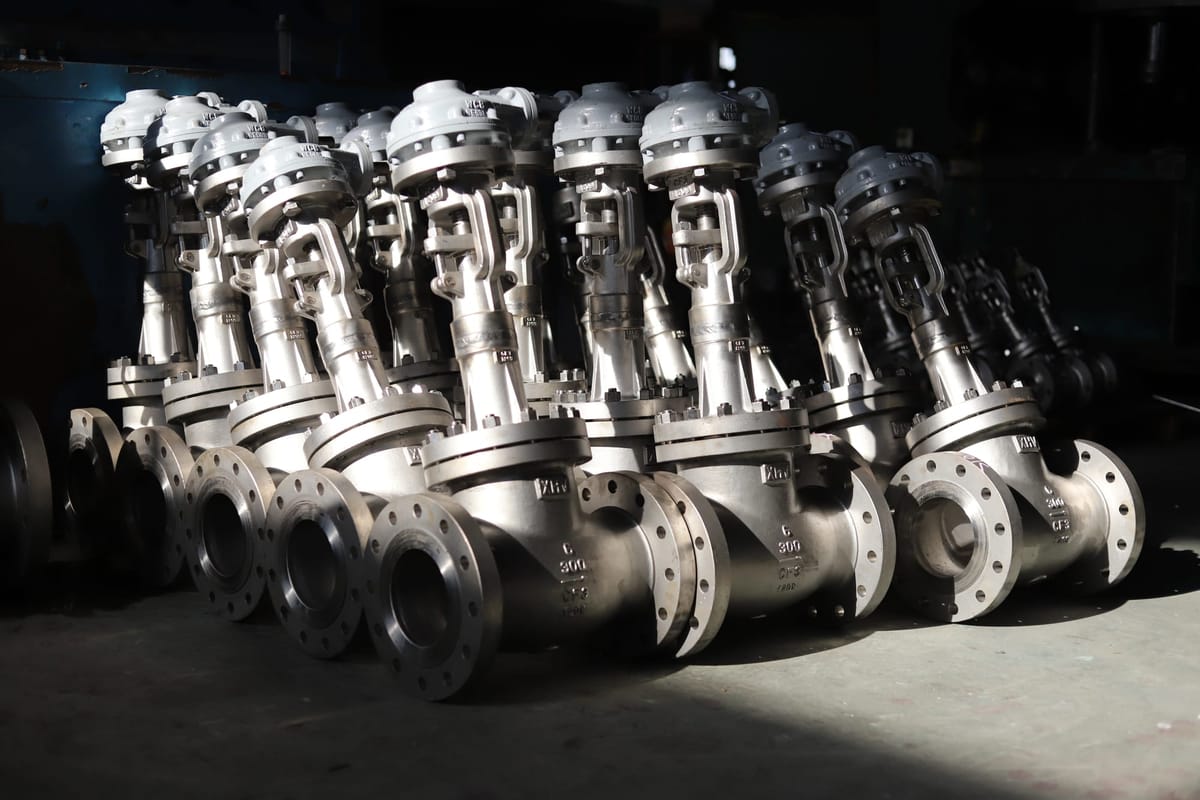
Oil and gas is where valve engineering gets serious. Pipeline isolation valves must seal after years in service, hold high pressure and survive fire. The workhorse is the trunnion-mounted ball valve built to API 6D.
Trunnion vs floating ball
A floating ball relies on the seats to hold the ball; a trunnion ball is supported top and bottom so seat loads stay stable at high pressure and large sizes. For anything above roughly 6 inches or Class 600, trunnion is the standard.
Fire-safe and anti-static design
Fire-safe valves keep a secondary metal-to-metal seal when the soft seat melts. Anti-static features bond the ball and stem to prevent sparking from static build-up in gas service. Both are routine requirements in API 6D.
Double block and bleed
DBB capability lets you verify isolation by venting the cavity between two seats. This is the basis of safe maintenance on live pipelines and why DBB ball valves are specified so widely.
Testing and traceability
Every valve carries a heat number and full material certificates. Hydrostatic and pneumatic seat tests to API 598 or ISO 5208, plus pressure testing of the body, are non-negotiable before shipment.
In oil and gas, a valve is a safety device as much as a flow device. Specify to the standard, and verify the paperwork.