Valve Selection for Skid Builders and OEMs
Valve selection for skid builders and OEMs: space and weight limits, standardized components, multi-duty design, certification flow-down, batch consistency and documentation.
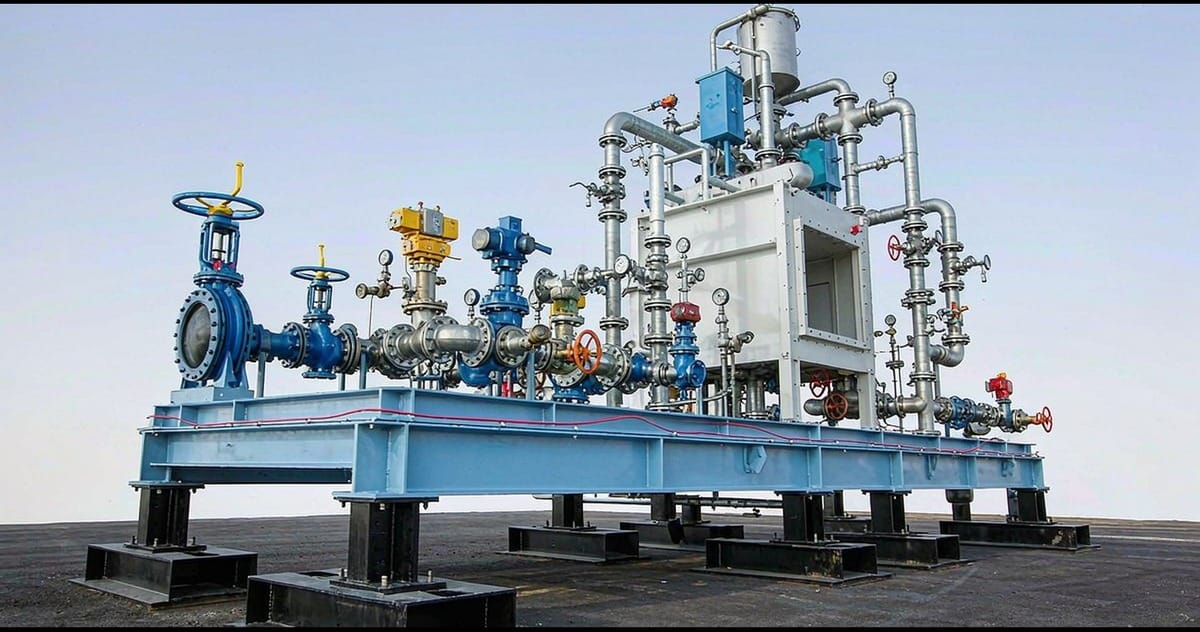
Valve Selection for Skid Builders and OEMs
A skid or packaged process unit lives or dies by its shop schedule. Every component on it must arrive on time, fit the first time, pass the package acceptance test, and arrive again — identically — on the next unit. Valves sit squarely inside that logic, and the selection criteria that work for a single plant position do not always transfer to an OEM context. A skid builder is not choosing one valve for one service; the builder is choosing a valve platform that must survive dozens of units, multiple customers, and a purchasing cycle where consistency is worth more than any individual optimization.
This article looks at valve selection from that side of the fence.
The Constraints That Define OEM Valve Choice
Skid and package design compresses decisions into constraints a plant engineer rarely faces:
- Space. Piping on a skid is shorter, bends are tighter, and clearances around handwheels and actuators are what is left over after the equipment fits. Valve face-to-face length, handle orientation, and actuator envelope are selection criteria, not afterthoughts. A valve that is excellent on paper but demands an extra pipe spool to install is the wrong valve for the skid.
- Weight. Transport limits, lifting points, and structural loading push toward lighter body configurations where the duty allows. Weight saved across many valves on a unit adds up to real freight and steel savings.
- Modularity. Repeatable spool designs and standardized weld preparations reward valves with consistent end connections and face-to-face dimensions across a product family — so that one spool drawing serves several valve models in the family.
- Shop acceptance. The whole skid is hydrotested and function-tested in the works before shipment. Valves must tolerate the package test, the drain-and-preserve cycle, transport vibration, and storage before installation — a duty cycle different from a valve installed directly into a running plant.
Standard Components versus Engineered Valves
The most valuable skill in OEM valve selection is knowing where standardization pays and where an engineered answer is unavoidable.
- Standardize the bulk. Isolation valves, drains, vents, and instrument root valves across a unit should come from one or two product families with common trim, common ends, and common accessories. This drives purchasing volume, simplifies spool drawings, and makes the shop crews fast — they install the same valve the same way every time.
- Engineer only the outliers. A control valve on a specific service, a valve for a particularly erosive or cavitating duty, or a position governed by the end user's criticality ranking deserves its own datasheet. Forcing these into the standard list to save a line item usually costs more at commissioning.
- Watch the hidden variety. Variety creep on skids comes from small sizes and connections — drains, sample points, gauge isolations. A short list of standard small-bore valves and fittings, applied rigidly, removes more confusion than most other measures combined.
Designing Across Multiple Operating Cases
A packaged unit may operate at different capacities, feed compositions, or ambient conditions depending on where each unit ends up. The valve selected must therefore cover the duty envelope of the whole family of units, not the nominal design point of one:
- Check shutoff and throttling behavior at both the high- and low-pressure-difference cases; a valve fine at design flow can be unstable at turndown.
- Verify seat and packing materials against the full temperature and chemical envelope the units may see, including the cleaning or flushing media used between batches.
- Where the duty envelope is genuinely wide, select a valve characteristic and actuator sizing that hold up at the extremes — and document the envelope in the datasheet so future variants inherit the reasoning.
Certification and the Flow-Down Problem
The end user's industry adds a certification layer that arrives — inevitably — through the middle of the project. A skid built to a general industrial standard may be destined for a service that demands fire-safe testing, fugitive emissions qualification, particular pressure equipment directives, or material restrictions.
The practical rule: identify the flow-down requirements before the first unit is built, not after the end user's reviewer does.
- Map the end user's specification early: which valves need which certificates, and whether the certificates must cover the specific units or can be type-based.
- Distinguish type-test certificates (valid for a design family) from unit-specific documentation (heat traceability, unit test reports). Type-based evidence keeps the document load manageable across many units.
- Keep the certification claim in the OEM's own documentation consistent with what the valve manufacturer can actually issue — an overclaimed certificate discovered at handover costs far more than the document would have.
Batch Consistency and Manufacturer Management
For an OEM, the valve question is never just "is this valve good" but "will the next unit's valves be the same." Consistency comes from structure:
- Working with a manufacturer that produces the main product ranges in-house, so that body castings, trim, and test practice do not shift silently between batches.
- Fixing the datasheet revision and the acceptance criteria for the duration of the frame, so a running order and a replacement order are built to the same definition.
- Agreeing a change-notification rule: if the manufacturer changes a material source, packing style, or drawing revision, the OEM hears about it before the affected units are built.
- Qualifying spares availability for the life of the product line — an OEM's customers will demand parts for years after the last unit ships.
Simplified Documentation with Traceability Intact
OEMs live between two document regimes: their own shop needs lean paperwork to move fast, and the end user's handover needs a traceable package. The workable split:
- For the shop: a one-page valve schedule per skid — tag, size, class, model, ends, actuation — is all the floor needs.
- For the handover: material certificates for pressure-retaining parts, pressure test reports, and any unit-specific certificates, organized per unit serial number.
- Keep the mapping explicit: each valve on the schedule traceable to its certificates. A package that is lean and traceable passes handover review; a package that is lean and untraceable comes back.
When the End User's Specification Conflicts with the OEM Standard
It will happen: the end user insists on a valve type or maker-differentiated detail that differs from the OEM's standard list. The productive sequence:
- Ask first whether the requirement is a hard specification clause or a preference. Many conflicts are preferences wearing specification clothing.
- Where it is hard, adopt it for that unit family and record it — selective standards beat rigid ones.
- Where the requirement conflicts with proven function, respond with evidence: test data, qualification documents, or a deviation proposal with engineering justification. End user reviewers respect data; they reject assertions.
Cost-Sensitive Selection Strategy
When the unit competes on price, the temptation is to strip valve quality everywhere. The smarter allocation:
- Spend on the valves whose failure stops the package test, delays shipment, or creates warranty exposure.
- Save on valves in low-consequence service where a solid standard product is fully adequate — most drains, vents, and utility isolations.
- Never save on documentation to the point where handover stalls; documents that arrive late cost schedule, and schedule is the OEM's most expensive commodity.
Requesting a Proposal
OEM and skid valve programs reward a manufacturer who can hold consistency across batches, meet certification flow-downs, and keep documentation lean but traceable. An experienced manufacturer that produces the full valve range in-house — ball valves, control valves, gate valves, globe valves, check valves, strainers, knife gate valves, plug valves and butterfly valves — can support skid builders with standardized families, unit-level test reports and frame-agreement pricing. Send your Valve Schedule or the key parameters for each position to the manufacturer's applications team for a per-line proposal.



