Valve Selection Mistakes That Keep Repeating, and How to Avoid Them
The valve selection errors that show up again and again on real projects — wrong operating data, ignored differential pressure, seat choice, actuator sizing, solids, access — and the correct fix for each.
Every few months a plant calls about a valve that "doesn't work," and after a short conversation it turns out the valve is doing exactly what it was asked to do — it was asked the wrong thing. The same handful of errors show up on project after project, across industries and across decades, and almost none of them are exotic engineering problems. They are data problems, assumption problems, and shortcuts taken when the datasheet was being filled in under deadline pressure. The valves are usually fine. The inputs were not.
This is the list that keeps coming back, and the fix for each.
Mistake one: filling in the wrong pressure
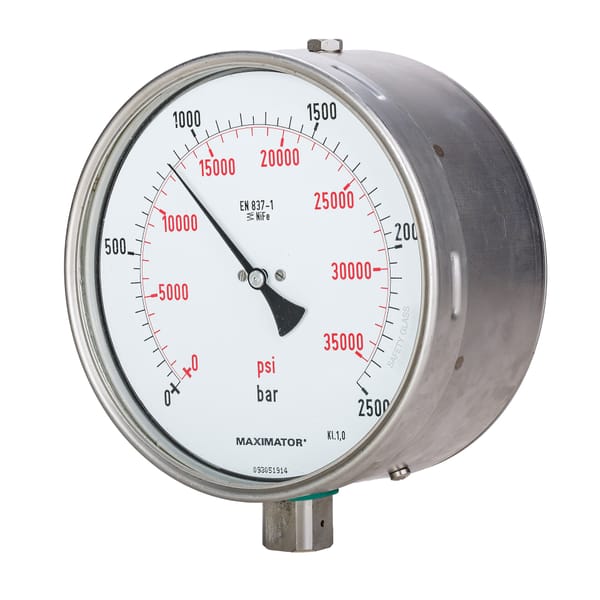
A surprising number of valve datasheets list design pressure but never the actual operating pressure, or list a maximum that has nothing to do with how the line really behaves. A valve selected for the highest number on the sheet and never checked against the normal operating condition can end up oversized, throttling badly, or chosen with a trim that never sees its intended duty.
The related version is mixing up pressure and differential. Line pressure tells you about the shell; differential pressure across the valve tells you about the trim, the actuation, and the noise. They are not the same number.
Correct approach: report operating pressure, maximum pressure, and differential across the valve for each position. If any of these is unknown, find out before selecting, not after.
Mistake two: ignoring closing differential and water hammer
One of the most common causes of damaged valves is a valve that is fine while open but slammed shut against full differential pressure. The resulting surge — water hammer — does not just damage the valve; it can crack piping, damage supports, and create a problem far bigger than the valve itself.
Slamming does not require a defect. It happens when a closure is sized for static conditions and nobody asked how fast it moves, or what momentum the fluid carries when it stops.
Correct approach: state the closing differential explicitly, and say how fast the closure has to act. If the line is long or the fluid is dense, treat surge as a design input, not an afterthought.
Mistake three: soft seat where metal seat belongs, and the reverse
Soft-seated valves seal extremely well and cost less, which is why they get specified generously. But soft seats have temperature limits, they can be attacked by certain media, and they can be damaged by solids or by repeated high-velocity flow. Metal-seated valves tolerate heat, abrasion, and rough service, but sealing is tighter to achieve and often costs more.
The error runs in both directions. People put soft seats into hot or abrasive service because they seal so nicely, then wonder why they fail. People put metal seats into clean, moderate service and pay for capability they do not need.
Correct approach: choose the seat from the service, not from habit. Temperature, media chemistry, and solids content should pick the seat before price does.
Mistake four: sizing the actuator on new-valve torque with no margin
Actuators get sized on the torque it takes to move a brand-new valve on a test bench. In service, that number drifts upward: friction grows, deposits build, packing tightens, and the valve may sit in one position for a long time before it has to move. An actuator sized exactly to the clean, new-valve number is an actuator that will fail to operate the day it is actually needed.
Correct approach: size the actuator against end-of-life or worst-case torque, with a sensible safety margin, and confirm the available air supply or power can deliver it. The margin is not padding; it is the difference between a valve that strokes and one that stalls.
Mistake five: ignoring solids and scaling
Solids and scaling are the quiet killers. A valve chosen on clean-fluid logic can jam, erode, or fail to seal once the medium starts carrying particles or depositing on internal surfaces. Cavity-filling, seat damage, and blocked passages all trace back to a spec that assumed the fluid would behave.
Correct approach: say clearly whether the media carries solids, and whether the line is prone to scaling or crystallization. The answer changes the valve type, the trim, and often the whole approach to the position.
Mistake six: forgetting installation space and maintenance access
A valve that works beautifully on paper can be a nightmare in the pipe rack. Handwheels fouling structure, actuators with no clearance to stroke, valves boxed in so nobody can reach a flange or lift a bonnet — these are installation problems that turn into maintenance problems for the life of the plant. The valve itself never gets blamed; the choice does.
Correct approach: check the physical envelope before selection is frozen — actuator clearance, removal path, flange access, and lifting route. Get the maintenance team to look at it while it is still a drawing.
Mistake seven: reverse-eliminating on price
This is the most expensive mistake of all because it looks like discipline. The correct valve gets specified, then the list gets trimmed by price until the cheapest options remain, and the engineering logic that justified the original choice quietly disappears. What is left is a low unit price and a high total cost of ownership: more failures, more downtime, more spares, more unplanned work.
Price matters. But eliminating on price alone, after selection, is how projects buy problems.
Correct approach: compare on total cost across the intended life, including downtime and maintenance, and hold the technical requirement fixed during commercial evaluation. If the budget will not support the right valve, cut scope honestly rather than quietly downgrading the specification.
Why these keep happening
None of these mistakes requires bad engineering. They happen because datasheets get filled in by whoever is closest, with whatever number is handy; because lead times push selection late; and because the person specifying the valve is rarely the person who will live with it. The errors survive because they are invisible until commissioning, and by then the valve is installed and the schedule is closed.
The fix is mostly procedural. Ask for operating conditions, not nameplate conditions. Require differential pressure and closure speed. Tie the seat to the service. Size the actuator with margin. Ask about solids. Check the physical space. And keep the technical requirement intact through commercial evaluation.
Where this usually lands
Most repeat selection mistakes are cheap to prevent and expensive to fix, and the cheapest prevention is a second pair of eyes before the datasheet is frozen. An experienced industrial valve maker that produces the full valve range in-house — ball valves, control valves, gate valves, globe valves, check valves, strainers, knife gate valves, plug valves and butterfly valves — sees these patterns constantly and can often spot a questionable selection from the line item alone. Send your valve list or the questionable positions to the manufacturer's applications team and ask for a per-position proposal, including the operating conditions each position should be checked against.