Tank Farms and Terminals: The Valve Stack Behind Every Transfer
Behind every tank transfer sits a chain of valves — tank root isolation, emergency shutdown, loading arms, manifold switching, vapour recovery and fire isolation. The commercial consequences of getting any link wrong show up as product loss and missed cargo.
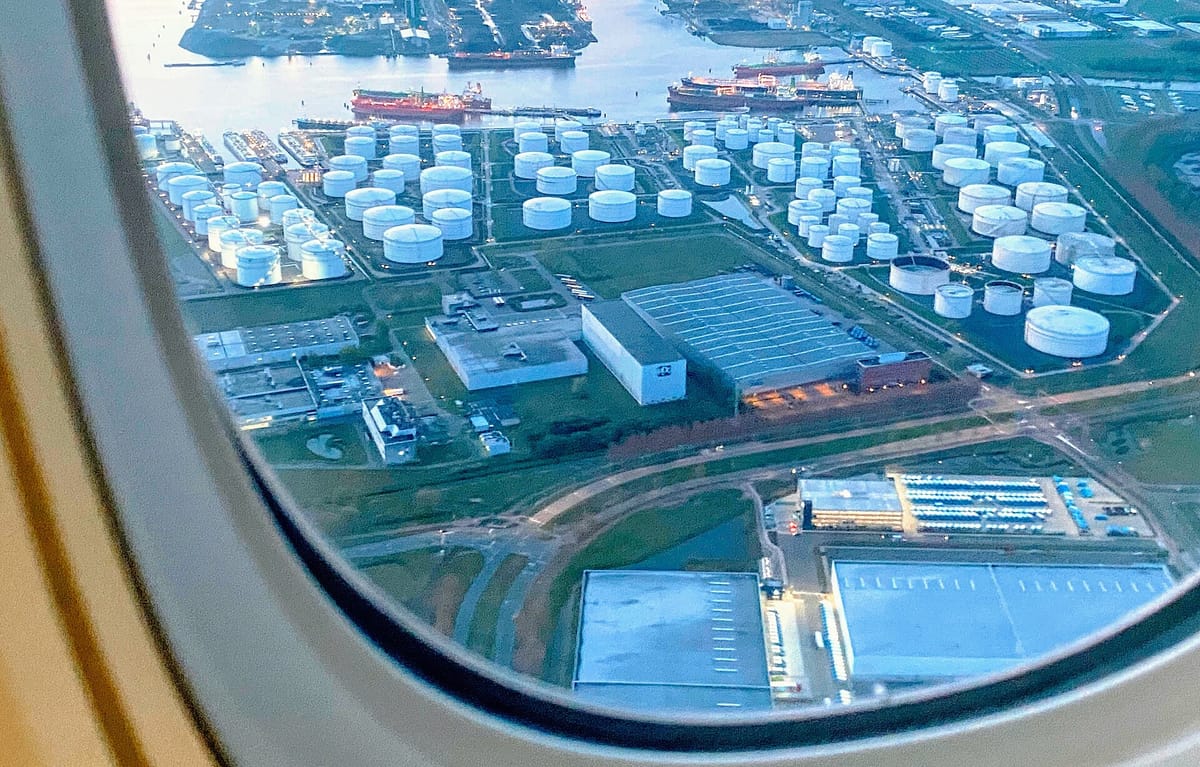
A tank transfer looks simple from the outside. Product leaves one tank, travels through a pipe, and arrives in another. What the outside view hides is the chain of valves the product has to pass through, and how many of them have to be in the right position at the right moment for the transfer to be safe and clean. Behind every transfer is a stack of isolation, switching, emergency and recovery valves, and the commercial result of the operation depends on all of them.
Tank farms and terminals are a business of thin margins and high consequences. A lost cargo, a contaminated batch, or an emergency that cannot be isolated quickly outweighs any saving from a cheaper valve.
The tank root valve is the one that cannot fail
Every tank has a root valve at the point where the tank connects to the piping. It is the first line of defence and, in many ways, the most important valve in the terminal. When something goes wrong elsewhere, the root valve is what stops the tank from becoming part of the problem.
Why it matters so much:
- It is the isolation point that protects the tank inventory during a downstream incident.
- It is often called on during an emergency, which is exactly when a stiff or unreliable valve is most dangerous.
- It sits in a service where any leakage is a continuous loss, not an occasional one.
The judgement here is not subtle. Root valves deserve the heaviest duty selection the terminal can justify, because the cost of a root valve failure is measured against the entire tank contents.
Emergency shutdown valves: speed, sealing and the isolation argument
Emergency shutdown valves exist for the worst day. Their job is to close fast and seal reliably when the terminal needs to stop a transfer under pressure. That combination of speed and tightness is harder to achieve than either one alone.
Where terminals get this wrong:
- A fast-closing valve that does not seal completely, so the isolation is only partial.
- A tight-sealing valve that closes too slowly to protect the system it is meant to safeguard.
- A valve that passes its test at commissioning and has not been exercised since, so nobody knows its real condition.
The trade-off between closing speed and sealing quality is real, and it should be settled by the terminal's own risk assessment rather than by whatever valve happened to be available. The correct answer differs between a light product and a heavy one, and between a short manifold and a long one.
Loading arms, quick connectors and the equipment around them
At the dock, the loading arm is the interface between the terminal and the vessel, and the valves around it work under conditions that are frankly hostile. The arm moves, the vessel moves, and the product moves in large volumes over a short window. The valves in that area have to tolerate all three.
The recurring issues:
- Vibration and mechanical stress around the arm, which loosen hardware and wear trim over time.
- Rapid temperature changes when a cold or hot product arrives after a period of inactivity.
- Quick connectors and the valves behind them, which see frequent connection and disconnection and depend on clean sealing surfaces to stay tight.
The honest reading is that arm-area valves need mechanical robustness as much as correct sealing. A valve that is right for the product but light for the movement will still leak, and the leak will not wait for a convenient moment to start.
Manifold switching and the real value of double block and bleed
The manifold is where product is routed between tanks, lines and berths, and it is where a lot of the terminal's commercial risk concentrates. A poorly isolated manifold does not just leak. It mixes products, and mixed product is a commercial event, not a maintenance one.
This is where double block and bleed earns its place. The arrangement gives the operator a way to prove isolation, not just assume it, because the bleed point shows whether product is passing the first block. That proof is exactly what a mixing-risk assessment needs.
Why the value is genuine and not decorative:
- It allows a positive check that a line is isolated before a switch, rather than relying on a single valve to be perfect.
- It reduces the chance that a slow seat leak turns two grades into one off-spec batch.
- It makes routine switching auditable, which matters when a customer disputes a contamination claim.
The counterargument is cost and space. Double block and bleed takes more valves and more footprint than a single isolation valve. The trade-off is reasonable to challenge on low-value, single-product lines and much harder to justify on a manifold handling multiple grades.
Water hammer and the speed at which valves close
Water hammer is the classic consequence of closing a valve too quickly in a line full of moving liquid. The pressure surge travels through the system, finds the weakest point, and does its damage there. In a terminal handling large volumes, the surge can be significant.
What operators should watch:
- How fast emergency and isolation valves actually close, versus how fast they are assumed to close.
- Whether the piping and supports can absorb the surge if a valve closes at full speed.
- Whether a slower or staged closure would give adequate protection with far less stress on the system.
The trade-off between closing fast enough for safety and closing slowly enough for the pipe is one of the terminal's genuine engineering decisions. Treating every valve as if it must slam shut is a good way to create a new failure mode while solving an old one.
Vapour recovery lines and the valves nobody thinks about
Vapour recovery protects the terminal from emissions and product loss, and its valves are easy to neglect because they are not part of the main product path. That neglect is a mistake. Vapour lines run on their own logic, and their valves face their own pressures and sealing demands.
The points worth attention:
- Shutoff quality, because vapour leaks are both a compliance issue and a product loss.
- Materials that tolerate the vapour composition, which is not always the same as the liquid.
- Reliability on lines that are rarely inspected because they rarely cause visible trouble.
Vapour systems tend to fail quietly and then fail expensively, so they deserve the same selection discipline as the main product lines.
Fire isolation and the emergency that defines the design
Fire isolation is the scenario the terminal hopes never to use and must be designed for anyway. In a fire, the ability to isolate sections of the terminal quickly is what limits the spread and protects the rest of the site.
The design questions:
- Which valves are relied upon to isolate during a fire, and are they genuinely fire-safe for that role?
- How quickly and reliably can those valves be closed under emergency conditions?
- Is the emergency isolation scheme tested and maintained, or is it assumed to work because it is on a drawing?
A fire-isolation scheme that has never been tested is a plan, not a capability.
The commercial consequences of a leaking valve
In most industries a leaking valve is a maintenance item. In a terminal it is a commercial one. A leak across a manifold can turn a clean grade into a contaminated one, and a contaminated cargo is a dispute, a downgrade and sometimes a rejected delivery.
The way to bring this back into selection is to describe, for each critical position, what happens commercially if the valve does not hold. That turns an abstract specification into a business case.
Building the valve stack deliberately
A terminal's valve stack is not a collection of independent purchases. It is a system in which the root valve, the emergency valve, the manifold block and bleed, the vapour line and the fire isolation all depend on each other. Getting the stack right is a matter of matching each position to what it actually has to do, including what it costs the business when it does not.
This kind of review is usually done jointly with the manufacturer. An experienced maker that produces the full valve range in-house — ball valves, control valves, gate valves, globe valves, check valves, strainers, knife gate valves, plug valves and butterfly valves — can usually tell you within days whether a proposed selection is realistic for a given transfer duty. Send the line list, the switching sequence and the isolation philosophy to the manufacturer's applications team and ask for a per-position proposal.