Strainer Maintenance: Cleaning Procedures and
How to read differential pressure across pipeline strainers, clean baskets safely, inspect mesh damage, and build a maintenance record that predicts fouling.
Strainer Maintenance: Cleaning Procedures and Differential Pressure Signals
A strainer is one of the least glamorous components in a piping system and one of the most consequential. When a basket blinds over, flow drops, pumps cavitate, and downstream equipment starves. When a basket ruptures, debris travels straight into the pump or the precision valve the strainer was installed to protect. Both failure directions — blinding and breakthrough — are predictable, and the signal that predicts them is almost always differential pressure. Maintenance strategy therefore revolves around one instrument and one disciplined routine.
Why Differential Pressure Is the Primary Signal
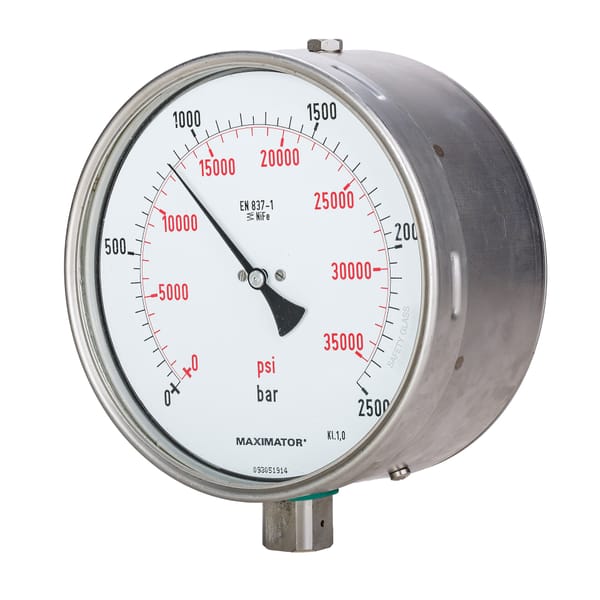
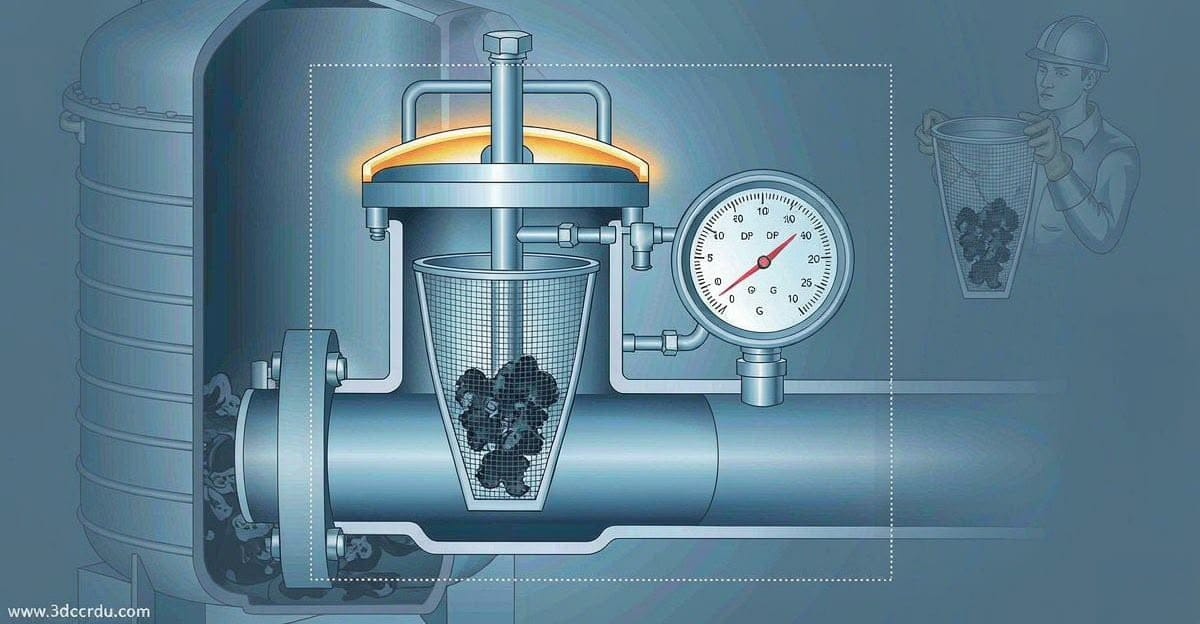
The pressure drop across a clean strainer is small and stable — a fraction of a bar in liquid service, less in gas. As debris accumulates on the mesh, open area shrinks and the delta-P climbs. That climb is the strainer's only honest self-report, and there are three common ways to capture it.
- A pair of pressure gauges, one upstream and one downstream, read manually during rounds.
- A differential pressure gauge mounted directly across the body, which eliminates the error of comparing two separate readings.
- A differential pressure transmitter wired to the control room, with alarm setpoints at a "clean me" threshold and a second, higher threshold that indicates the basket is approaching collapse territory.
The setpoints deserve engineering attention rather than habit. Setting the cleaning alarm at the same delta-P for every line regardless of service is a common mistake. The correct threshold depends on the clean baseline, the mesh rating, the strength of the basket, and what the pump upstream can tolerate at reduced flow. In high-viscosity service, the clean delta-P itself shifts with temperature, so the alarm logic must account for operating state, not just the raw number.
Two failure signatures hide in the trend data, and distinguishing them is where an experienced operator earns their pay.
- A slow, gradual rise over days or weeks is normal fouling. Debris is accumulating exactly as designed. Schedule a cleaning at the next convenient window.
- A sudden step change — delta-P jumping or, in the case of a ruptured basket, actually falling back toward the clean value — is a mechanical event. A jump usually means a large object has blocked the basket abruptly. A sudden fall after a sustained rise frequently means the mesh has torn open and the strainer has stopped straining.
That second pattern is the trap. Without a trend, a ruptured basket can look like good news: pressure drop returned to normal, problem solved. Only the history makes the diagnosis possible, which is one more reason to log readings rather than trust memory.
Cleaning Procedures: From Routine Flush to Chemical Soak
The cleaning method should match the fouling mechanism. Blanket advice like "remove and hose down" wastes hours and can damage the mesh.
For reversible fouling — loose scale, welding slag, sediment — a backflush of the strainer body, using the drain connection to reverse flow briefly and carry loosened debris out, may extend the interval between basket removals. Not every strainer body is designed for backflushing, and reversing flow can deform a weak mesh, so confirm the construction before making it routine.
For a basket that must be removed, the sequence matters more than most crews admit.
- Isolate and depressurize the strainer fully, then verify zero energy — a basket under a standing liquid head has injured many technicians.
- Open the cover with care for trapped pressure even after isolation, especially in flashing-liquid service.
- Remove the basket and support it properly; a loaded basket is heavier than it looks and the mesh deforms easily when carried by its edge.
- Wash from the inside out, so debris is pushed out of the mesh rather than driven deeper into the weave; low-pressure water or an air lance for dry fouling.
- For hardened deposits — polymerized hydrocarbons, scale baked onto the wire — ultrasonic cleaning in a suitable solvent bath is far kinder to the mesh than scraping. Wire brushes and sharp tools cut through the fine wire that gives the mesh its rating.
- Chemical cleaning, circulating a compatible solvent or descaler, is the last resort for deposits that mechanical and ultrasonic methods cannot shift. The chemical must be compatible with the basket material — a stainless basket will survive most descalers, but gaskets, ties, and protective coatings may not.
After cleaning, the basket should be dried and inspected before it goes back in — a wet basket in a hot oil line generates flashing, and a damaged one defeats the entire exercise.
Inspecting the Basket: Damage and Mesh Verification
Inspection is where cleaning becomes maintenance. Hold the basket up to a light source — a torn or punctured mesh shows immediately as bright spots. Then work through the checklist:
- Look for deformation — dents from handling, bulging from having operated at excessive delta-P, a bowed bottom that means the basket has been working near its collapse limit.
- Check the mesh-to-frame joint. The seam where mesh meets the perforated frame is the classic failure point; a small separation there passes particles while the mesh itself looks intact.
- Verify the mesh size is still what the drawing calls for. Crews sometimes replace a damaged basket with whatever is on the shelf, and a strainer silently converted to a coarser mesh no longer protects what it was installed to protect. Recording the mesh rating in the strainer's history file, and confirming it at every cleaning, closes this gap.
- Inspect the gasket seating surface on the basket flange or rim; a damaged seating face creates a bypass path larger than any tear.
Temporary conical strainers deserve special management. Installed at commissioning to catch weld slag and construction debris, they are meant to come out after the initial flushing period. Left in place, they quietly add permanent pressure drop; removed without the spacer piece some designs require, they leave a gap in the line. The commissioning plan should state in writing when the temporary cone comes out, what replaces it, and who signs off. Formal baskets should be stocked before startup, so removal of the cone is not delayed by procurement.
Duplex Arrangements and On-Stream Service
Where the process cannot tolerate an interruption for basket cleaning, a duplex or changeover strainer keeps one chamber in service while the other is opened. The discipline points here are different:
- Never open a chamber until the changeover is confirmed complete and the idle chamber is depressurized and drained. Interlocks and mechanical stops exist because operators have been burned by a half-seated valve.
- Verify seating after each switchover. A changeover valve that does not fully seat leaks between chambers, and the leak shows up as an unexplained bypass of debris downstream.
- Clean and inspect the idle basket while the opportunity exists; a duplex strainer is not an excuse to skip inspection, it is what makes inspection possible without shutting down.
Some basket designs allow replacement under partial conditions with proper tooling and procedure, but this belongs in a written procedure, not improvisation.
Records, Trends, and Spare Baskets
The maintenance file for each strainer should be as routine as the cleaning itself. Record date, delta-P at removal, the nature of the debris, mesh condition, and the delta-P after reassembly with a clean basket. Over a season, the trend tells you the true fouling rate for your service, which lets you schedule cleanings on the calendar rather than in panic, and it flags a fouling-rate change that usually means something upstream has changed.
Spare baskets are cheap insurance. At least one cleaned, inspected, certified spare per strainer size allows a dirty basket to be swapped in minutes and cleaned offline at leisure instead of holding up the line. Spares should be stored cleaned, dried, and identified with their mesh rating.
Closing the Loop with the Manufacturer
Strainer bodies, basket strength, mesh options, and pressure tapping arrangements vary more between designs than most purchasing specifications acknowledge. When a strainer keeps blinding faster than expected, or a basket has deformed under pressure, the manufacturer's applications team can review the operating delta-P data, the debris description, and the mesh selection, and recommend a basket construction or a self-cleaning alternative that fits the service. An experienced manufacturer that produces the full valve range in-house — ball valves, control valves, gate valves, globe valves, check valves, strainers, knife gate valves, plug valves and butterfly valves — can support this review with pressure drop data and basket construction options. Send your Valve Schedule or the key parameters for each strainer position to the manufacturer's applications team for a per-line proposal.