Small Modular Reactors and the Nuclear Valve Supply Chain
SMR programs are changing nuclear valve demand — smaller, standardized, batch-built. Here is what that means for qualification, lead times, and buyers evaluating nuclear-grade supply.
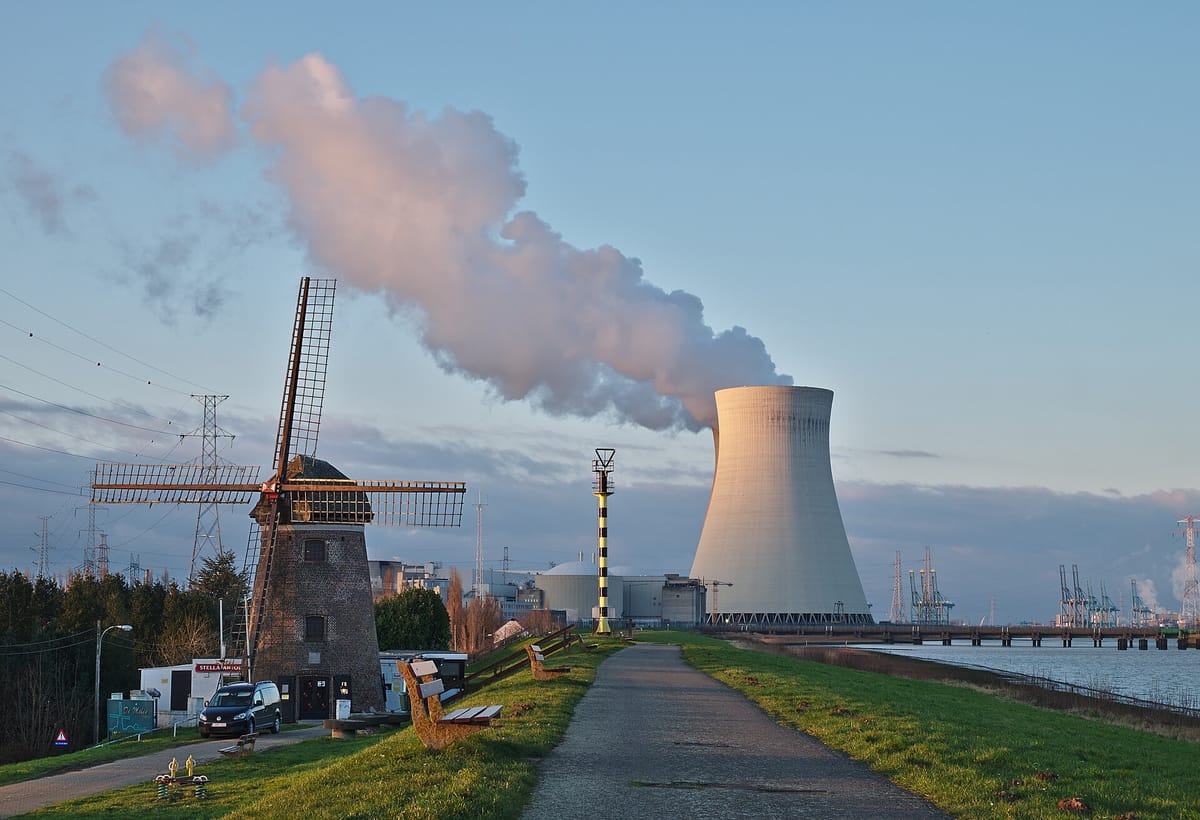
The first time a project engineer asks you to look at valves for a small modular reactor, the scope sounds familiar and then it does not. The pressures are lower. The bore sizes are smaller. The count is higher, and the drawings are less settled than anything you would see on a conventional nuclear island. That combination — smaller, more repetitive, less bespoke — is the story of how SMRs are bending the nuclear valve chain.
Most of the announcements are still paper. A handful of designs are genuinely under construction, a larger group is in licensing, and an even larger group is a rendering with a press release attached. Buyers who plan as if every program will be built get burned; buyers who ignore the category entirely miss the one or two programs that will actually move. The useful posture is somewhere in between: understand how SMR demand differs, and prepare for the parts of it that are real.
Why SMR valve demand does not look like classical nuclear
Conventional nuclear work has always been a bespoke business. Every valve position is engineered, documented, and often re-engineered during construction. The volume is small and the engineering hours per unit are enormous. That is why the nuclear valve chain has always been thin, expensive, and slow.
SMRs push in the opposite direction:
- Design intent is shop-fabricated modules, so the same valve specification repeats across many identical units rather than being customized per plant.
- Operating pressures and temperatures are frequently lower than a large light-water reactor, which opens the door to valve types and materials that classical nuclear work treated as marginal.
- The economic case depends on building the same unit many times, which turns valve demand into a batch-manufacturing problem rather than a one-off engineering problem.
- Standardization is not a nice-to-have; it is the whole point. If every unit is custom, the modular concept collapses.
The catch is that "smaller and lower pressure" does not mean "easier." A valve that is simple at 16 bar in a chemical plant is not simple when it sits in a nuclear safety function, because the difficulty was never the pressure — it was the proof.
The qualification gate is the real bottleneck
Ask anyone who has tried to move a conventional industrial valve into a nuclear scope and you hear the same list of pain:
- Nuclear-grade quality assurance, typically built around a recognized QA program with documented controls over design, purchasing, manufacturing, and testing.
- Full material traceability, from heat number to finished part, held for the life of the plant and audit-ready at any moment.
- Qualification testing — seismic, environmental, and in many cases design-basis accident conditions — that a standard industrial valve has never been asked to survive.
- Commercial-grade dedication, where an existing industrial product is upgraded through testing and analysis to nuclear duty rather than redesigned from scratch.
- Document packages that are as much of the deliverable as the hardware itself.
None of this is new. What is new is the volume. Classical nuclear projects needed a small number of highly qualified positions. An SMR fleet, if it happens, needs the same rigor applied to a much larger, more repetitive valve population. The qualification effort amortizes better across a fleet, but it still has to be done first, unit by unit, before the first shipment.
For a manufacturer, that is the strategic question. Nuclear-grade qualification is a long, expensive, paperwork-heavy path with no guaranteed order at the end. Some makers will decide it is not worth it. The ones who commit early are betting that the repetition is real. That bet is defensible now in a way it was not a decade ago, but it is still a bet.
Lead time, not price, is what buyers misjudge
When procurement first scopes an SMR package, the instinct is to run it like any capital project: get quotes, compare unit prices, award. That instinct fails here, for one reason — there is very little nuclear-qualified capacity relative to the potential demand, and the capacity that exists is booked well ahead.
What actually determines a schedule:
- Whether the valve type you selected has an existing nuclear qualification, or needs one built from zero.
- How much of the QA documentation has to be created rather than adapted.
- Whether the maker already has an approved QA program, or is starting the approval process with the regulator.
- Whether the testing lab you need has availability in the window you need it.
Buyers who lock in a qualified source early — even before the design is frozen — usually win on schedule. Buyers who shop the position at the last minute end up either paying a premium or slipping the milestone. In a program that lives or dies on schedule credibility, that slip can be fatal.
What this means for makers who want in
The realistic entry path is narrower than it looks:
- Start with non-safety-related positions where industrial-grade hardware with good documentation is acceptable, and build a nuclear track record before aiming at safety systems.
- Invest in traceability and document control first — not as a compliance cost but as the actual product. In nuclear, the paperwork is the differentiator.
- Pick a valve family where repetition is highest, so the qualification investment amortizes across a fleet instead of a single order.
- Assume commercial-grade dedication will be the entry mechanism for several positions, and build the testing relationships to support it.
- Accept that regulatory approval is slow and stage it deliberately, rather than promising a qualification that does not exist yet.
The makers who move on this now are not chasing today's orders. There are not many today. They are positioning for the repetition, which is the only thing that makes an SMR fleet economically coherent in the first place.
How a buyer should evaluate nuclear-grade claims
A surprising number of "nuclear-capable" claims fall apart under two questions. The first is: show the QA program and the regulator's acceptance of it. The second is: show a valve of this type and size that has actually passed the qualification testing, not a sibling product or a paper analysis. Everything else is conversation.
A workable screen:
- Ask for the QA program documentation and evidence it is accepted by the relevant authority, not just a certificate of registration.
- Ask specifically which qualification tests this exact product family has passed, and under what design-basis conditions.
- Ask how material traceability is maintained from incoming heat to shipped part, and who holds the records.
- Ask whether the position is being qualified from scratch or dedicated from an existing industrial product, and what that means for schedule.
- Ask for the document package that would ship with the hardware, and read it.
If a maker can answer those without hedging, you are probably talking to someone who has actually done nuclear work. If the answers are vague, the qualification is probably aspirational.
Where this leaves the chain
SMRs will not replace classical nuclear, and they are not yet a volume business. But they are the first serious attempt to make nuclear hardware a repeatable manufactured product rather than a series of bespoke projects, and that shift touches everything downstream of the reactor design — including the valves. The winners here will be the makers who treat qualification and documentation as core products, and the buyers who treat lead time as the binding constraint rather than price.
This kind of scoping is best done with the manufacturer rather than in isolation. An experienced industrial valve maker that produces the full valve range in-house — ball valves, control valves, gate valves, globe valves, check valves, strainers, knife gate valves, plug valves and butterfly valves — can tell you fairly quickly which positions are realistically nuclear-grade and which are not. Send the relevant line items or application details to the manufacturer's applications team and ask for a per-position proposal.