Reading a Valve Nameplate: Markings, Trim Numbers, and
A field guide to valve nameplates — required markings under MSS SP-25, API 600 trim number meanings, API 6D ball valve plates, traceability numbers, and how to spot a fake nameplate.
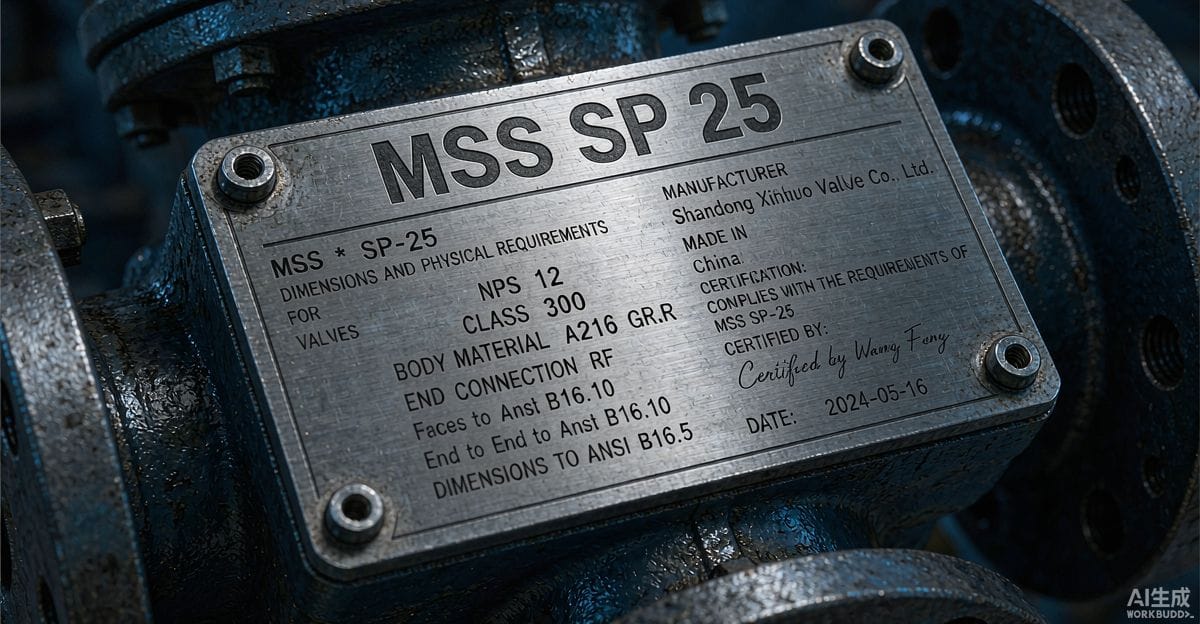
Reading a Valve Nameplate: Markings, Trim Numbers, and MSS SP-25
The nameplate is the valve's passport, and in most disputes — wrong material delivered, questionable pressure rating, missing fire certification — it is the first document inspected and the last word on what the maker claims the valve is. Yet most field engineers read only the size and the rating and ignore the rest, which is a waste: a nameplate contains a complete condensed specification if you know the code. This article walks through what should be on the plate, how to decode trim numbers, and how to verify that the plate is telling the truth.
What a Nameplate Must Carry
MSS SP-25, the Standard Marking System for Valves, Fittings, Flanges and Unions, is the baseline marking standard for most industrial valves in the American tradition. It defines which markings are mandatory, which are optional, and how they are arranged. On a properly marked valve, expect to find:
- The manufacturer's name or trademark — the identity that carries legal responsibility for the product.
- The nominal size, in inches or DN, marked clearly.
- The pressure class — ASME Class 150, 300, and so on, or the PN equivalent for European-marked valves.
- The body material, identified by an ASTM grade or an MSS SP-25 material abbreviation.
- The seat, trim, or trim number identifying the internal materials.
- The standard the valve is made to, where applicable.
- Service ratings where the standard requires them, such as the full pressure-temperature information referenced to the governing standard.
Additional markings appear when the service demands them: fire-safe certification marks on soft-seated quarter-turn valves (test per API 607 or API 6FA), NACE MR0175/ISO 15156 references for sour service, low-temperature or special-service designations, and API monograms on valves licensed under API programs. A plate carrying a certification mark the valve cannot substantiate is worse than a plate with fewer markings — it is a claim waiting to be audited.
Decoding API 600 Trim Numbers
For wedge gate valves and other API 600 valves, the nameplate often carries a trim number from 1 to 16, and this number is a complete statement of the internals. The logic: each trim number fixes the seat ring, wedge/disc facing, stem, and backseat materials as a matched set. The common ones:
- Trim 1 — the classic all-iron package: cast iron seat rings and wedge, with the stem in carbon steel. Found on old cast iron utility valves.
- Trim 2 — cast iron internals with a stainless steel stem.
- Trim 3 — a step up with bronze-mounted internals: bronze seat rings and wedge facing on cast iron bodies.
- Trim 5 — hardened cobalt-based facing on the seats and wedge (Stellite-type facings are the industry reference) with a stainless stem — the traditional refinery workhorse for clean hydrocarbon service.
- Trim 8 — the same cobalt-based facing concept in a ferritic stainless body package.
- Trim 10 — stainless internals throughout: stainless seat rings and wedge, stainless stem, in the standard stainless body package.
- Trim 12 — stainless body package with cobalt-based hardfacing on seats and wedge, for stainless service needing wear resistance.
- Trim 16 — duplex stainless internals for chloride-rich service where standard stainless pitting resistance falls short.
Two practical notes. First, the trim number tells you the design intent, but the actual hardness, facing thickness, and material certificates must still be checked against the purchase order — the number is a claim, not a certificate. Second, many modern specifications replace cobalt-based facings with nickel-based or other hardfacing alloys for cost or sourcing reasons; when that substitution is made, the nameplate should show a supplementary marking or the certificate should state the substitute, because "Trim 5" strictly implies the cobalt-based system.
Ball Valve Nameplates: API 6D
Pipelines valves made to API 6D carry a different plate style, reflecting their different service: full pressure-temperature rating info, the valve type designation, and markings that pipeline operators audit: maximum differential pressure, drain and vent configurations on double block and bleed designs, and the sealant injection provisions where fitted. API 6D valves also carry the monogram where the maker is licensed, and the plate typically states the applicable edition of the standard. When a pipeline valve's plate lacks the differential pressure or the double-block-and-bleed designation the purchase order called for, that is a nonconformance to raise before installation, not after.
Traceability Numbers: Heat Numbers and Certificates
Beyond the specification markings, every credible nameplate carries traceability identifiers:
- A serial or traceability number linking the valve to its inspection records, test reports, and manufacturing order.
- Heat or cast lot numbers — often on the body itself rather than the plate — linking the pressure-retaining castings to mill test certificates. These are what allow a purchaser to walk backward from the valve in the plant to the chemical analysis and mechanical test results of the actual melt.
The pairing matters: a nameplate that says "CF8M" proves nothing without the heat number that ties this particular body to a certificate showing the actual composition. During site receiving inspection, checking that the heat number stamped or cast into the body matches the number on the material certificate is the single most effective anti-counterfeit check available.
Counterfeit and Mismatched Plates
Falsified nameplates exist, and not only on gray-market imports. Re-stamping is a known fraud: a Class 150 body re-marked as Class 300, or a standard carbon steel body marked with an alloy grade. Several verification practices catch most cases:
- Cross-check the casting. The cast heat number and grade markings on the body should match the plate; a missing or altered casting mark next to a pristine plate is a red flag.
- Compare the plate against the certificate package. Material certificates should reference the same heat numbers and the same serial number as the plate.
- Verify the marking method. Reputable makers stamp, cast, or electro-etch plates durably and consistently; laser-etched overlays on suspiciously new-looking plates deserve scrutiny.
- Check typography and layout against the maker's format — inconsistent fonts, misaligned rows, and plates riveted over ground-down originals are classic signs.
- Verify positive material identification (PMI) where the alloy content matters. A handheld XRF reading on the body settles questions about stainless grades in seconds.
A Receiving-Inspection Checklist
For a site acceptance walk, the plate check reduces to a short list:
- Size and class on the plate match the purchase order and the piping line class.
- Body and trim materials match the specification, with certificates matching the heat numbers.
- The governing standard and any special service marks (fire-safe, sour service, low temperature) that were ordered appear on the plate.
- Serial number on the plate matches the number on the test certificate, and the pressure test report shows the correct test medium, duration, and acceptance.
- The valve operates smoothly and the stem packing was adjusted after the shop test, if the certificate notes it.
Five minutes with the plate and the certificate package at the gate prevents weeks of documentation chasing after installation.
Using the Plate in Procurement
Nameplate discipline starts before delivery. When evaluating offers, the marking scheme a maker commits to reveals its familiarity with the governing standards; vague answers about trim designations or missing fire-test marks are early warning signs. An experienced manufacturer that produces the full valve range in-house — ball valves, control valves, gate valves, globe valves, check valves, strainers, knife gate valves, plug valves and butterfly valves — will mark each valve fully to MSS SP-25 or the applicable API standard, deliver certificates tied to the nameplate serial and heat numbers, and support any PMI or audit you schedule. Send your Valve Schedule or the key parameters for each position to the manufacturer's applications team for a per-line proposal with the marking and certification plan stated line by line.



