Valve Standardization: Reducing Variety Across a Plant
How to run a plant valve standardization program: cost of variety, consolidation analysis, limits of standardization, framework agreements, and implementation steps.
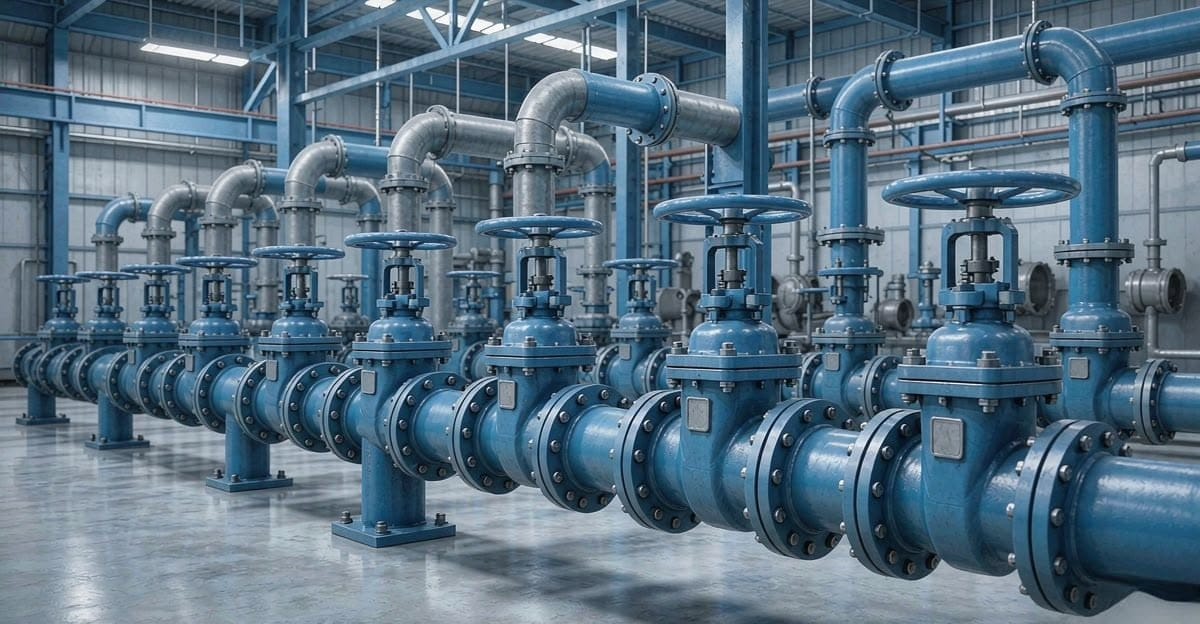
Valve Standardization: Reducing Variety Across a Plant
Walk through the storeroom of a plant that has never standardized its valves and you will find the symptom immediately: half a dozen gate valves of the same size and class, from different design eras, with different face-to-face dimensions, different stem thread directions, and different packing styles — none of them interchangeable with the valve actually installed on the line. Variety accumulates one small decision at a time, and each increment of variety is paid for over decades in spares, training, and mistakes.
A valve standardization program is the deliberate reversal of that accumulation. Done well, it cuts inventory, reduces installation errors, and improves purchasing leverage — without forcing any valve into service it does not suit. Done badly, it becomes a blunt rule that ignores process reality. The difference lies in how the consolidation analysis is done and where the boundary is drawn.
What Variety Actually Costs
The cost of variety is easy to underestimate because each piece of it is small. Added up across a plant, it is not:
- Spares inventory. Every distinct design requires its own seats, seals, gaskets, packing, and often its own stem. Ten designs where three would do means more stock, more stockout risk per design, and more obsolete parts when a design is superseded.
- Training and human factors. Maintenance crews who service five valve families work faster and with fewer errors than crews who service twenty. Non-rising versus rising stems, different handwheel orientations, different packing adjustment procedures — each difference is an opportunity for a mistake at three in the morning.
- Wrong-installation risk. When look-alike valves differ in trim material or pressure class, the odds of installing the wrong one into the wrong line rise with the number of look-alikes on the shelf.
- Purchasing fragmentation. A fragmented valve population splits order volumes across many sources, weakens negotiating position, and multiplies the administrative load of qualifications, audits, and document control.
What to Standardize
Standardization works dimension by dimension. The useful objects of consolidation are:
- Valve type. Reducing the number of valve families used for similar duties — for instance, settling on one family of quarter-turn valves for a given pressure class rather than two overlapping ones.
- Size and pressure class. Pruning odd sizes and classes that entered the plant through one-off projects. Size rationalization alone frequently removes a surprising share of the population.
- Materials. Consolidating body and trim material grades to a short, service-mapped list. One cast stainless grade used everywhere it qualifies is easier to procure, test, and stock than three near-identical grades.
- End connections. Aligning flange standards, ratings, and facing within each service, and preferring weld or flange ends consistently by service type rather than by project habit.
- Actuation platform. For automated valves, standardizing on common actuator platforms, accessories, and interface dimensions. This is often the single largest maintenance and spares win, because actuator and accessory variety exceeds valve body variety.
- Documentation and test requirements. A single plant-level ITP template and documentation list per valve class removes the per-project negotiation that creates scope drift.
How to Run the Consolidation Analysis
The analysis starts from the installed base, not from a catalog. The steps that work in practice:
- Build the population. Extract every valve from the equipment register: size, class, type, materials, end connections, actuation, service, and the original project that installed it. Where the register is incomplete, a physical survey of critical areas fills the gaps.
- Group into families. Cluster valves by function and service: isolating, throttling, check duty, solids handling. Within each family, tabulate how many distinct designs are doing the same job.
- Rank by variety cost. For each family, estimate the spares and maintenance burden of the current variety. Families with many designs and low criticality are the easiest early wins.
- Define the target list. For each family, select the standard: the type, material, and end connection that covers the duty envelope. The test for a good standard is that it serves the family's range of conditions without heavy over- or under-specification.
- Decide the migration rule. Existing valves are not replaced for the sake of tidiness. The standard applies at replacement, at change of service, and at new projects; the installed base migrates naturally through attrition.
The Boundary: Where Standardization Must Stop
Standardization earns its keep only as long as it does not distort the selection. The boundary to hold:
- Do not force a standard valve type into a service where its weaknesses are active — cavitating drops, solids-laden slurry, tight shutoff requirements, or frequent cycling. The standard list should have enough depth to cover these duties, not a single answer for all of them.
- Do not standardize pressure class downward across a service to match the majority, forcing the extreme cases into margins they lack.
- Do not freeze materials so rigidly that a new service has no compliant entry in the standard. The standard should have a documented escape route: an engineering exception process with a named approver and a defined review.
The exception process is not a flaw in the program; it is what makes the program durable. If engineers cannot get a legitimate exception, they will route around the standard — and the standard decays.
Combining with Framework Agreements
Standardization and procurement structure reinforce each other. Once the target list exists, the consolidated volumes behind it are worth a framework agreement: agreed pricing for the standard list, defined lead times for routine replacements, and pre-agreed quality and documentation requirements so each order does not reopen the technical conversation.
The framework works best when:
- Pricing is tied to the standard list with a transparent adjustment mechanism for material movement.
- The agreed documentation and test scope is attached once, not renegotiated per order.
- Emergency and turnaround support terms — faster response for defined situations — are part of the agreement rather than an ad-hoc scramble.
The New-Project Dividend
The clearest return shows up on the next capital project. When a project inherits a plant standard:
- The datasheets largely write themselves from the standard list, cutting engineering hours.
- The purchaser negotiates from consolidated volume instead of project-by-project quantities.
- The new valves drop into an existing spares and maintenance ecosystem instead of creating new islands of variety.
Making the standard a formal input to project specifications — not informal tribal knowledge — is what captures this dividend.
Implementation and Handling Resistance
A workable rollout sequence:
- Pilot on one or two valve families with obvious redundancy, and publish the inventory and procurement results.
- Appoint a single owner for the standard list with authority over additions and exceptions.
- Embed the standard in the project execution procedure and the purchasing process, not just in a guideline document.
- Review the list on a fixed cycle, so it evolves with service changes rather than ossifying.
Expect two predictable objections. Maintenance may worry that fewer designs means worse fit for specific equipment — answer this with the exception process and the family-level duty envelopes. Engineering may see the standard as a constraint on design freedom — answer it with data from the pilot and by involving plant engineers in defining the list, so the standard is theirs as much as anyone's.
Requesting a Proposal
Standardization programs go faster when the target list can be validated against actual product ranges and duty envelopes. An experienced manufacturer that produces the full valve range in-house — ball valves, control valves, gate valves, globe valves, check valves, strainers, knife gate valves, plug valves and butterfly valves — can map a plant's valve population onto a consolidated standard list and support the framework terms with consistent quality and documentation. Send your Valve Schedule or the key parameters for each position to the manufacturer's applications team for a per-line proposal.



