Pharmaceutical Plants: Valves, Documentation, and Change Control
In pharmaceutical plants the hard part is rarely the process conditions — it is the paperwork. Material certificates, surface finish, change control, validation status and supply chain traceability decide whether a valve can be installed at all.
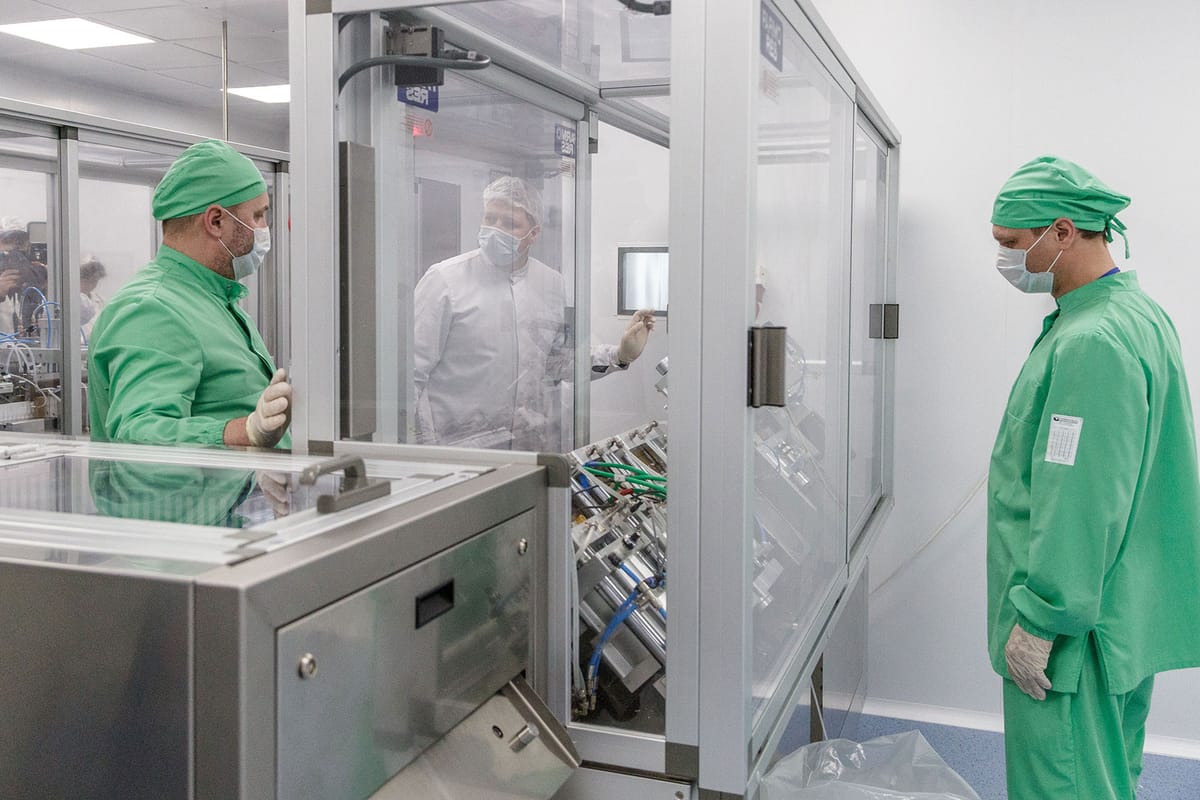
A pharmaceutical plant can run water at modest temperature and pressure and still be one of the hardest places in industry to change a valve. That surprises people who come from oil and gas or power, where the difficulty is usually the service itself. In pharma the service is often gentle. The difficulty is the evidence.
Everything a valve does in a pharmaceutical plant has to be provable to an auditor. That shifts the centre of gravity of valve selection away from mechanical performance and toward documentation, validation and change control. A valve that works perfectly but cannot be documented will not be installed, and a valve that is documented but whose replacement breaks a validated state is not obviously an improvement either.
The audit looks at the valve's paperwork before its performance
In a regulated plant, the wetted parts of every valve are part of the product contact surface record. Auditors want to see material certificates, finish specifications and evidence that the installed item matches the design. That documentation requirement drives selection in ways that a purely technical buyer does not expect.
What the paperwork actually demands:
- Material certificates that can be traced to the specific components used in the valve.
- Surface finish specified and, where it matters, verified rather than assumed.
- Evidence that the installed valve matches the specification the plant validated, down to the relevant details.
- Records that survive a component change, so a replacement does not create a gap in the trail.
The practical consequence is that the cheapest valve is rarely the cheapest option. If the documentation is incomplete, the plant pays for it in audit findings, investigations and rework, not at the point of purchase.
Material certificates and surface roughness are contract terms, not preferences
In most industries a material certificate is a nice-to-have. In pharma it is closer to a contract term. The plant is not buying a valve so much as buying a valve plus the proof that it is made of what it claims to be made of.
Where plants get caught out:
- A replacement part that meets the working requirement but arrives with a different certificate trail than the original.
- A surface finish that was specified once and then quietly relaxed when a substitute was used.
- Documentation that covers the valve but not the elastomers or seals inside it, which are also product contact.
The judgement here is simple. Either the plant controls the documentation of every component it installs, or it accepts that it will eventually have to explain a gap during an audit. The second option is more expensive than it looks.
Every replacement can trigger change control
Change control is where pharmaceutical valve maintenance stops being routine. In many plants, replacing a valve is not a maintenance action. It is a change to a validated system, and it carries the process that word implies.
What a replacement can set off:
- A formal change request with review and approval before the work is done.
- An assessment of whether the change affects product quality or the validated state.
- Documentation of the change, including justification and supporting evidence.
- A decision about whether any re-qualification or re-validation is needed.
A like-for-like replacement of the identical part is usually straightforward. The difficulty is when the original part is no longer available, or when a plant tries to improve a valve and inadvertently changes the validated state. That is the point at which a maintenance decision becomes a compliance project.
Keeping the validated state: calibration and qualification
Validation is not a one-time event. The plant has to be able to show that the system remains in the state it was validated in, and that requires ongoing discipline around calibration and qualification.
What this looks like day to day:
- Instruments and positioners calibrated on a defined schedule, with records that prove it.
- Qualification status maintained so that a system does not drift out of compliance simply because nobody was watching.
- Changes assessed against the qualified state, not just against the physical equipment.
A valve that is mechanically fine but whose positioner calibration has lapsed is, in validation terms, a problem. That is a strange idea to engineers from other sectors, but it is the reality of running a regulated plant.
The supply chain information gap that leaves procurement exposed
Pharmaceutical procurement often sits in an uncomfortable position. The engineering team needs a specific, documented part. The market offers many parts that look equivalent on paper. And the information needed to confirm real equivalence is frequently not available quickly, or not available at all.
The recurring problems:
- Limited visibility into whether a replacement truly matches the original specification, beyond a catalogue description.
- Long documentation lead times that do not fit a plant maintenance window.
- Difficulty confirming whether a part comes from the same production context as the qualified original.
- Pressure to accept a substitute to avoid a shutdown, followed by months of paperwork to defend the decision.
The fix is not to trust catalogue equivalence. It is to treat documentation lead time as a real constraint and plan around it, rather than discovering it in the middle of a maintenance window.
Single-use technology and traditional stainless steel coexist
Many pharmaceutical plants now run single-use systems alongside traditional stainless steel. That has changed valve demand in interesting ways, because the two worlds have very different requirements.
Where the two paths diverge:
- Single-use systems push valve decisions toward the interface, the connector, and the bag rather than the valve body itself.
- Stainless steel systems retain the full weight of cleanability, surface finish and change control on the valve.
- Plants running both must manage two documentation regimes at once, which is where confusion tends to enter.
The practical consequence is that a plant cannot assume one valve philosophy covers the whole site. The selection logic follows the system type, not the building.
Practical advice for pharmaceutical buyers
Pharmaceutical procurement is a long game, and most of the pain comes from treating it like a short one. A few habits separate the plants that manage valve change well from the ones that do not:
- Keep a clean record of what is installed and why, so a replacement can be justified against a known baseline.
- Ask for documentation lead time up front, alongside price and delivery, and treat it as a selection criterion.
- Decide in advance which positions are truly critical to the validated state and which are not, so change control effort goes where it matters.
- Prefer parts whose documentation is complete and repeatable over parts that happen to be available quickly today.
- Involve quality and validation early, before a technical choice becomes a compliance problem.
None of this is glamorous, but it is the actual work of running valves in a regulated plant.
When the documentation is as important as the valve
In pharmaceutical plants the process conditions are rarely the hard part. The hard part is whether a valve can be documented, validated and changed without breaking something the plant has already proven. That makes valve selection a joint exercise between engineering, quality and the manufacturer, not a purchasing decision made on price and lead time alone.
This kind of review is usually done with the manufacturer's support. An experienced maker that produces the full valve range in-house — ball valves, control valves, gate valves, globe valves, check valves, strainers, knife gate valves, plug valves and butterfly valves — can usually tell you within days whether a proposed selection can be supplied with the certificate and finish documentation a regulated plant needs. Send the specification, the validated baseline and the audit requirements to the manufacturer's applications team and ask for a per-position proposal.



