Globe Valve Body Patterns: T-Pattern, Y-Pattern, and
T-pattern, Y-pattern, and angle globe valves differ in flow path, pressure drop, maintenance access, and suitability for flashing or erosive duty. A selection guide.
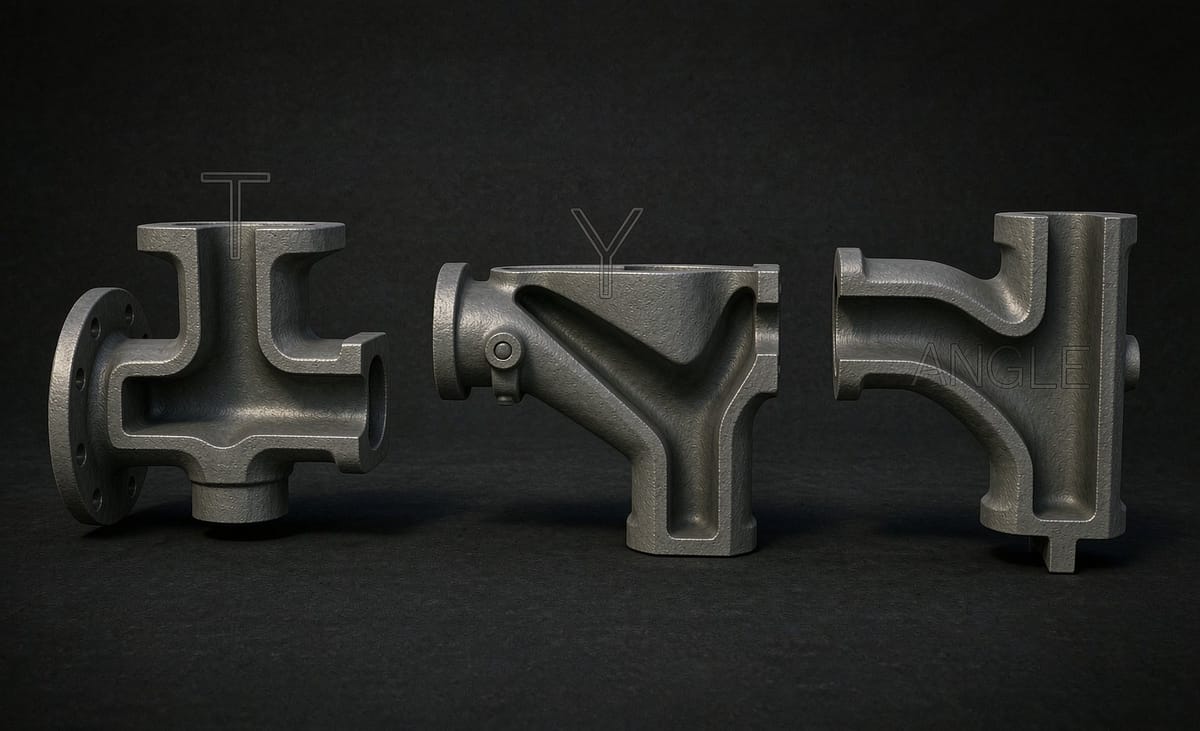
Globe Valve Body Patterns: T-Pattern, Y-Pattern, and Angle Valves
The globe valve exists because a line sometimes needs a seat that closes positively and throttles smoothly — and among the mainstream valve families, only the globe's perpendicular seat, with a disc driven straight onto it, delivers that combination with real authority. The price is a flow path that changes direction inside the body, and every one of the three body patterns — T-pattern, Y-pattern, and angle — is simply a different answer to the question of how much direction change the flow must endure, and what the designer buys or pays in exchange.
T-Pattern: The Standard Globe
The T-pattern (also called the standard or "globe" pattern) is the original form. The seat sits in a horizontal partition across the body; flow enters one side, turns upward over or under the disc, and exits the opposite side. The path through the valve resembles a letter S flattened inside the body — two right-angle turns and a passage across the seat.
This geometry gives the T-pattern its defining traits:
- Highest pressure drop of the three patterns. Two direction changes plus the seat restriction mean the T-pattern consumes head generously. In a throttling application this is irrelevant — the valve exists to burn pressure anyway — but in a mostly-open line it is a permanent pumping cost.
- Symmetric, robust construction with a short, well-supported stem and a disc guided perpendicular to the seat. Closing force is applied axially, directly, with no side load — the reason globe seats close tight and hold tight.
- Convenient maintenance geometry. The bonnet faces straight up, so trim, disc, and seat are accessible from above with the valve in the line, and the seat can be re-faced in place in many designs.
For on-off isolation duty, the T-pattern globe is normally the wrong tool — a gate or full-bore ball wastes less energy. But where the valve will spend its life throttling, regulating, or passing flow to a downstream restriction, the pressure drop is part of the job, and the T-pattern is the straightforward, maintenance-friendly answer.
Y-Pattern: The Compromise That Works
The Y-pattern takes the same perpendicular seat and tilts the whole stem-seat axis away from the flow path, typically by an angle that lets the flow pass with a much gentler turn. The seat remains perpendicular to the stem — so the closing mechanism, and its tight sealing, is unchanged — but the flow disturbance through the body is reduced sharply.
The benefits follow directly:
- Substantially lower pressure drop than the T-pattern at comparable size, approaching (though never reaching) straight-through valve behavior. In continuous-flow lines where the valve is normally open but must occasionally throttle or shut, this is the decisive argument.
- Better erosion behavior on throttling, because the flow strikes the seat at a shallower angle and the direction change is less violent.
- Outstanding packing and trim access. Because the stem is inclined, the packing gland and stem seal are angled up and out of the body's shadow — accessible with a wrench even in crowded installations, and a genuine advantage in maintenance-planning terms. The stem also tends to run cooler, away from the hottest flow region.
The costs: the Y-pattern body is longer face-to-face in most designs, more complex to cast, and somewhat more expensive than the T-pattern equivalent. The inclined stem also demands more careful actuator mounting. None of these are disqualifying; they are the premium paid for the flow efficiency.
A practical rule of thumb emerges: where the valve is normally wide open and throttling is occasional, specify Y-pattern and recover the energy permanently; where the valve throttles continuously and its pressure drop is part of the process design anyway, the T-pattern's lower cost and simpler maintenance win.
Angle Pattern: The Valve That Deletes an Elbow
The angle pattern merges the globe seat with a right-angle turn: flow enters horizontally, crosses the seat, and leaves vertically. The valve is, in effect, a globe valve and a pipe elbow combined into one body.
Where the piping genuinely turns, the angle valve pays twice:
- One fitting fewer. The elbow the valve replaces is deleted from the bill of materials, along with its welds, its support, and its future inspection points — and the pressure drop of that eliminated fitting is recovered.
- A natural fit for flashing and erosive service. This is the angle valve's most valuable role. When a high-pressure liquid throttles across a seat and flashes to vapor, the damage concentrates immediately downstream of the restriction; in a straight-through valve that damage lands in the body bore or the downstream pipe. In an angle valve discharging downward or into an enlarged outlet, the flashing zone is directed into an open, thick-section region of the body — or straight into a downstream vessel — where impingement can be tolerated, shielded, or replaced cheaply. Drain lines to flash vessels, boiler blowdown, letdown stations, and dump lines to atmosphere are the classic homes of angle valves.
- Simplified piping at vessels and headers where a bottom outlet or side nozzle needs both a shutoff and a turn.
The discipline required is orientation: an angle valve installed where the flow does not actually turn imposes the direction change rather than serving it, and the pressure drop penalty is then paid for nothing. Angle valves belong where the piping drawing already shows an elbow.
Draining, Venting, and Low-Point Service
The three patterns also differ in their drainage behavior, which matters more than it first appears. T-pattern bodies with their horizontal seat bridge can trap fluid on the upstream side of the partition; bodies that leave a low pocket after shutdown are a freeze and corrosion liability in outdoor plants, and a hygiene problem in food, pharma, and water-treatment service. Y-pattern bodies frequently include a drain connection at the lowest point of the inclined passage — one of the quiet reasons the pattern is favored in steam and hot-water service, where the valve can double as a natural drain point. Angle valves with downward discharge are self-draining by construction, which is exactly why they dominate blowdown and bottom-drain duties.
When specifying, check the body's self-draining geometry against the line's duty: a valve that holds a slug of process fluid after isolation will be a maintenance item every winter and a contamination source in any sanitary service.
Selection Checklist
Before fixing the pattern for each line position, run through the questions that actually decide it:
- Will the valve throttle continuously, occasionally, or almost never? Continuous throttling favors T-pattern; occasional action in a normally-open line favors Y-pattern.
- Does the piping already make a turn at the valve location? If yes, the angle pattern is nearly free; if no, it is a penalty.
- Is there flashing, cavitation, or erosive media at the throttling point? Angle pattern with the discharge directed to a tolerant zone.
- Does the position need a drain point, and does the body provide one that is actually at the low point?
- Is packing access constrained by adjacent piping or insulation? The Y-pattern's inclined stem earns its keep in congested plants.
Because pressure drop, flashing behavior, and maintenance access interact with seat design, trim material, and actuation, it is worth reviewing the globe valve positions in the valve schedule with the applications team of an experienced manufacturer that produces the full valve range in-house — ball, control, gate, globe, check, strainer, knife gate, plug, and butterfly valves. The manufacturer's applications team can size the trim, confirm the pattern for each service condition — including flashing and erosive duties — and return a per-line proposal with the relevant pressure-drop and material documentation.



