Data Centre Cooling: An Emerging Fluid Systems Market
Liquid cooling is turning data centres into fluid systems buyers. Here is what that means for valve demand, delivery expectations and procurement habits.
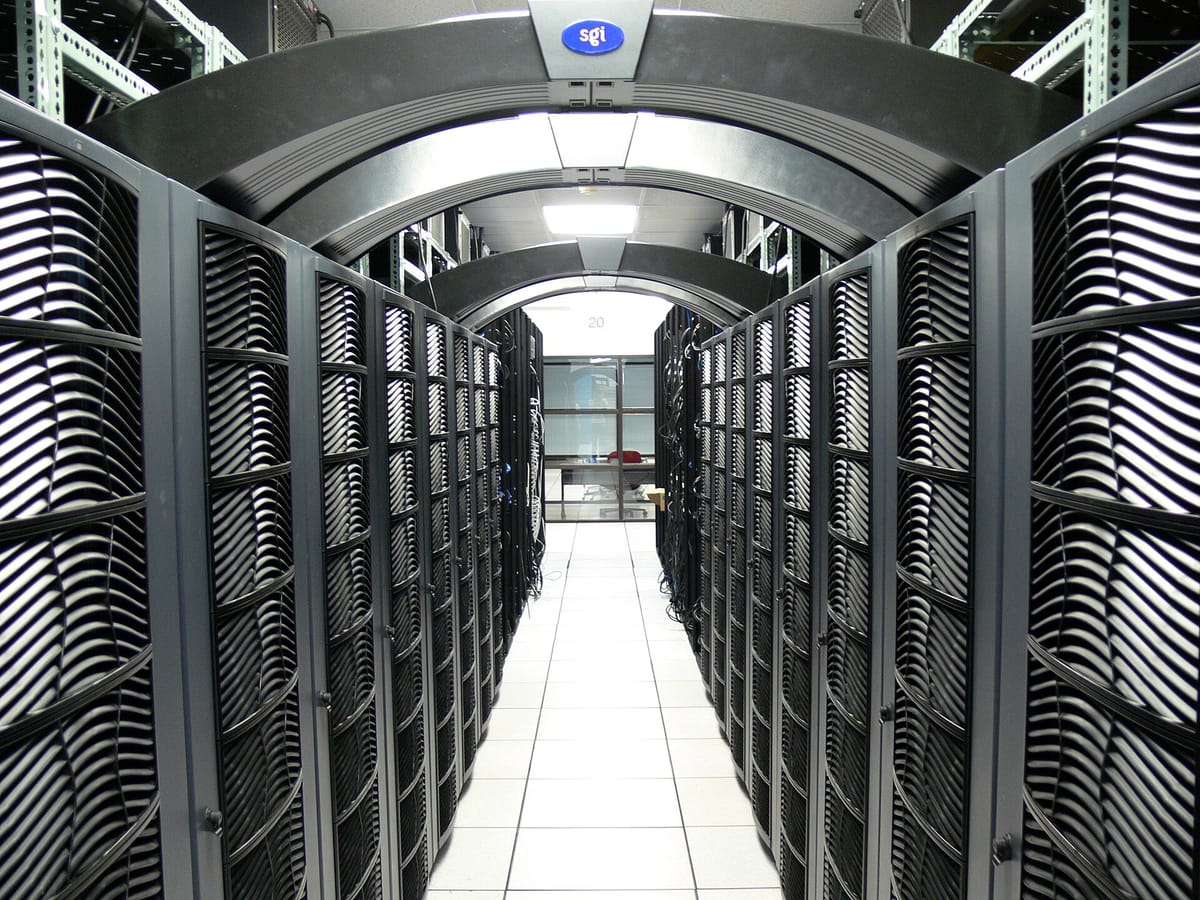
A valve buyer who has spent a career in refineries and chemical plants will walk into a data centre project and find almost everything familiar in the technical sense and almost everything wrong in the commercial sense. The pipes are pipes, the pumps are pumps, and the valves are valves. But the way the project is bought, scheduled and handed over breaks nearly every assumption that process industry procurement is built on. Data centre cooling is becoming a real fluid systems market, and it is importing a set of buyer habits that the industrial valve world is not used to.
Why this market arrived so quickly
For years, server halls were air-cooled and the fluid systems were modest — some chilled water, some condenser water, a bit of pumping. That era is ending. Compute density has risen to the point where air alone cannot move the heat out of a rack efficiently, and the industry has moved toward liquid cooling in several forms.
That shift changes the fluid side of a data centre from a supporting utility into a core system. The moment coolant loops start running close to the servers, the fluid system stops being background infrastructure and becomes something the operator worries about continuously. That is what turns a data centre into a valve market.
How it differs from ordinary industrial cooling
The technical similarities to industrial cooling systems are real, but the operating context is not the same, and the differences drive the buying behaviour.
- Operating pressure and containment. Many liquid cooling circuits run at comparatively low pressure, but the tolerance for leakage is much lower than in a traditional plant, because a leak is not just a maintenance issue — it is a risk to very expensive electronics in the same room.
- Reliability expectations. A power or chemical plant can tolerate a planned outage. A data centre treats any interruption to cooling as a serious event, so redundancy is designed in from the start, which multiplies the number of valves on any given loop.
- Speed of construction. A data centre can go from empty shell to live load in a compressed timeframe. That schedule does not accommodate the long lead times that process industry buyers take for granted.
- Standardisation. Because builds are repeated across sites, designs are increasingly standardised, which pushes toward repeatable, catalogue-style valve selections rather than bespoke engineering.
What the valve demand actually looks like
The requirements that flow from this are distinctive.
- Low maintenance. Valves end up in places where maintenance access is limited and downtime is expensive, so designs that hold their performance without constant attention are preferred.
- Fast delivery. Speed to site is a first-order requirement, not a nicety. A technically superior valve that arrives late loses to an adequate valve that arrives on time.
- Modular and skid-based. A lot of the fluid system arrives as prefabricated skids, so the valve scope is often packaged inside a module rather than bought line by line by the end user.
- Compact and repeatable. Standard sizes, standard connections, and a preference for designs the installing contractor has seen before.
- Clean fluid duty. The media are usually treated water, glycol mixtures or dielectric coolants, which is far less aggressive than process industry service. The challenge is reliability and availability, not corrosion resistance.
That last point is worth underlining. This is not a market that needs exotic materials or extreme ratings. It needs ordinary valves, well made, delivered fast, and reliable enough that nobody has to think about them again.
The construction pace breaks normal procurement
Here is where the cultural clash shows up. Process industry procurement is built around long design cycles, formal technical reviews, and lead times measured in months. Data centre construction is built around speed, and it treats supply chain as a schedule risk to be engineered out.
The result is a set of behaviours that feel alien to a traditional valve buyer:
- Decisions are made fast, often with less design detail frozen than a process project would insist on.
- Long-lead items are ordered early against preliminary designs, which means changes arrive after the purchase order.
- Contractors favour manufacturers who can commit to and hold a delivery date, even if the specification is still moving.
- Documentation and approvals must be light and fast, because the handover schedule does not wait.
For a manufacturer, this is a test of responsiveness as much as engineering. For a buyer, it is a test of discipline, because the temptation to skip technical review in the interest of speed is exactly how unsuitable valves end up in critical loops.
Where the two cultures genuinely conflict
The friction is not imaginary, and it is worth naming honestly.
- Traditional buyers ask for a full technical package before they will commit. Data centre schedules often cannot wait for it.
- Traditional buyers accept longer lead times for a marginal technical gain. Data centre projects will not.
- Traditional buyers think in project terms, one plant at a time. Data centre buyers think in repeatable designs deployed across many sites.
- Traditional buyers manage documentation extensively. Data centre projects want the minimum that satisfies the requirement.
Neither approach is wrong. They are optimised for different risks. The trouble comes when a manufacturer tries to serve the new market with the old sales model, or when a buyer imports process industry expectations into a project that cannot accommodate them.
What buyers should take from this
- Separate the critical loops from the general service, and apply rigour where it actually matters rather than uniformly.
- Confirm delivery capability before technical detail, because in this market the schedule usually decides the winner.
- Standardise the valve selections across sites, so that repeat builds do not repeat the same arguments.
- Verify that any packaged skid includes valves that are actually serviceable on site, not just convenient to assemble in the workshop.
- Do not let speed eliminate the review of the loops where a leak has real consequences. That is the one place where the fast model needs to slow down.
Data centre cooling is unlikely to ever be as technically demanding as LNG or hydrogen, but it is becoming a substantial and fast-moving source of valve demand, and it rewards manufacturers who can move at the speed of the build. Much of the selection work is best done at line-and-loop level rather than through a generic catalogue. A manufacturer that produces the full valve range in-house — ball valves, control valves, gate valves, globe valves, check valves, strainers, knife gate valves, plug valves and butterfly valves — can usually flag within days which loops need a higher grade of valve and which can safely use standard items. Send the relevant line items or application details to the manufacturer's applications team and ask for a per-position proposal.