Bypass Valves Around Main Valves: Purpose and Sizing Basics
Why bypass lines are fitted around main valves, how equalization and warm-up bypasses are sized, and the operating mistakes that make bypasses counterproductive.
Bypass Valves Around Main Valves: Purpose and Sizing Basics
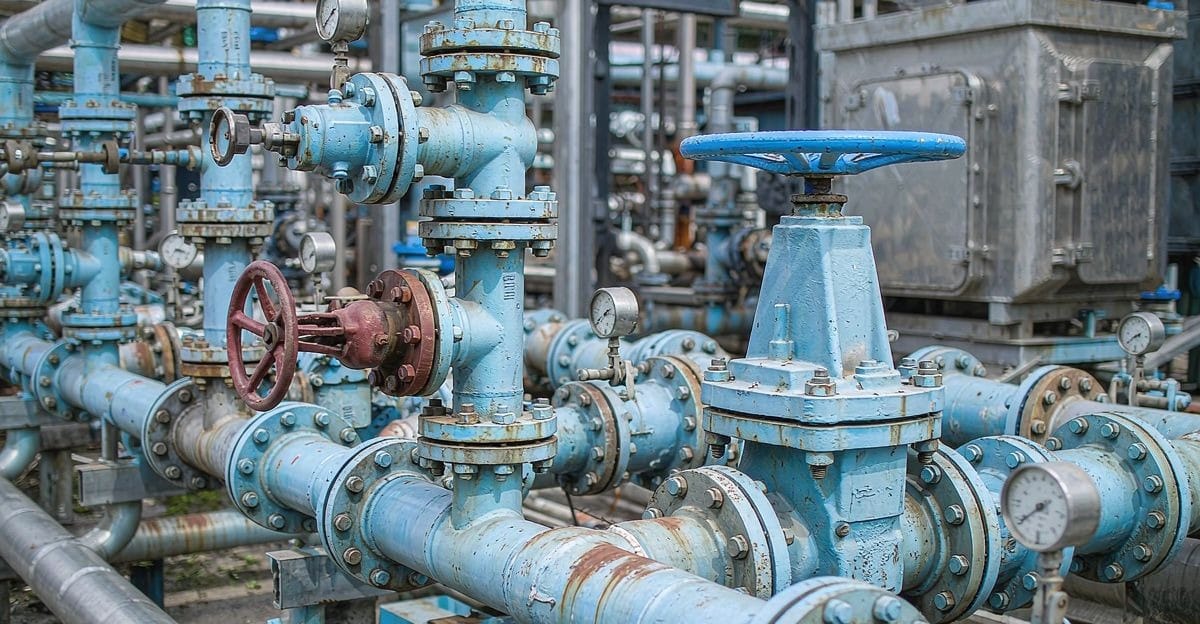
A bypass line is one of the cheapest items in a piping system and one of the most often misapplied. Drawn on a P&ID it is a short branch with a small valve around a large one. In operation it decides whether a large valve opens smoothly or slams, whether a steam line cracks with a water-hammer bang or warms up quietly, and whether a pump survives a closed-discharge start. Getting bypasses right is a matter of understanding what each one is for, because the sizing logic is completely different depending on the duty.
The Four Jobs a Bypass Does
Not every bypass is the same animal. In practice, bypasses around main valves fall into four distinct categories, each with its own purpose and sizing rule.
- Pressure equalization bypass: balances pressure across a large isolation valve so it can be opened without excessive differential pressure and seating damage.
- Warm-up bypass: admits a small, controlled flow into a cold high-temperature line — most often steam — before the main valve is opened.
- Startup or auxiliary bypass: carries initial flow while the main control or check arrangement is brought into service.
- Maintenance bypass: keeps flow passing while an upstream or downstream valve is isolated for repair, typically around a pair of series isolation valves.
Conflating these duties is the root of most bypass problems. A bypass sized for warm-up will not serve as a maintenance bypass; a maintenance bypass left cracked open will quietly defeat the main valve's shutoff.
Equalization Bypasses: Small on Purpose
The most common mistake with equalization bypasses is oversizing. The valve does not need to pass meaningful flow — it needs to let pressure settle across the main valve so that opening torque (or actuator thrust) drops to a manageable level.
Sizing therefore follows a simple logic:
- The bypass must pass enough flow to equalize pressure across the main valve in a time an operator is willing to wait — typically a modest interval, not an instant.
- Because equalization flow is small and the pressure drop available is large, a small trim with high inherent resistance does the job. Needle valves, small globe valves, and reduced-port ball valves are all seen; the key requirement is reliable shutoff and fine control of a trickle.
- The bypass connection itself should be small relative to the main line. A generous equalization line may sound harmless, but it changes the operating behavior of the whole station, as discussed below.
For high-differential isolation duties — hot water, boiler feed, high-pressure gas — the equalization bypass is not optional equipment. It is the difference between a valve that unseats gently and one whose seats are scored on every opening. Where actuators are sized without a bypass, they must be sized for full differential unseating; where a bypass is used and interlocked into the procedure, actuator sizing can be far more economical. This trade should be decided at design time, not discovered during commissioning.
Warm-Up Bypasses on High-Temperature Steam Lines
Cold steam lines are the classic application. Open a large steam valve onto a cold line and the entering steam condenses violently on cold metal, throwing condensate forward at high velocity. The result is water hammer, pipe movement, and in bad cases failed supports and joint leaks. The warm-up bypass exists to prevent exactly this.
The warm-up bypass is deliberately tiny. It admits just enough steam to raise line temperature and pressure gradually while the line's drains and traps handle the condensate being generated. The sizing criterion is thermal, not hydraulic: the bypass flow must be small enough that condensate generation stays within what the trapping arrangement can remove, and the line heats at a controlled rate.
A few operating points matter as much as the sizing:
- Warm-up takes time. The procedure must specify how long the bypass stays open before the main valve is cracked.
- The bypass should discharge into the line ahead of the drains, so condensate has somewhere to go.
- Warm-up bypasses see high differential pressure in a small trim, so erosion-resistant trim pays for itself here.
Pump Discharge Bypasses
A bypass around the pump discharge valve serves a different master: the pump, not the valve. Many centrifugal pumps are not permitted to run against a closed or nearly closed discharge for long, because they overheat or operate in an unstable region of their curve. A small bypass from upstream of the discharge valve back to the suction side (or to a safe destination) guarantees a minimum flow path during startup, shutdown, and low-demand operation.
Here the sizing input comes from the pump datasheet — the minimum continuous flow the pump is allowed to see — plus a margin for the bypass valve's shutoff leakage class. A bypass that leaks when it should not defeats the minimum-flow protection logic in both directions: it wastes energy in normal operation and can starve the process line.
One caution: an automatic minimum-flow recirculation is a control function, not just a static bypass. If the system relies on the bypass protecting the pump across all operating modes, the bypass valve's actuation must match the operating philosophy written for the pump.
Maintenance Bypasses Around Series Valves
Where two isolation valves sit in series — a common arrangement at battery limits and on critical lines — a bypass around one of them allows it to be overhauled without a full shutdown. The maintenance bypass must then satisfy a different set of requirements:
- It must be capable of carrying process flow at reduced capacity for the duration of the repair, not just a trickle.
- It must isolate positively when not in use, because a leaking maintenance bypass erodes the redundancy the series valves were installed to provide.
- Its position in the piping should allow one of the main valves to be drained and removed with the bypass holding the line.
Because the duty is flow-carrying rather than pressure-equalizing, maintenance bypasses are sized substantially larger than equalization bypasses — commonly a small but real fraction of line capacity — and the valve type is chosen for throttling or full shutoff as the procedure demands.
Choosing the Bypass Valve Type
Type selection follows the duty:
- Needle and small globe valves for equalization and warm-up, where fine control of small flow and tight shutoff dominate.
- Small ball valves where positive shutoff and quick operation matter more than throttling — typical for maintenance bypasses on clean service.
- Hardened or multi-hole trim where the bypass sees continuous high differential, as on boiler feed and high-pressure drop steam service.
In dirty or coking service, any small bypass is a plugging risk; the design should include access for cleaning or accept that the bypass will be blown through periodically.## Operating Sequence: The Part People Skip
A correctly sized bypass with the wrong operating procedure is still a failed design. The standard sequence around an equalized main valve is:
- Confirm downstream is ready and drains are open as required.
- Open the bypass slowly and allow pressure to equalize — or the line to warm — for the specified interval.
- Crack the main valve, let it stabilize, then open fully.
- Close the bypass and verify it holds tight.The last step is where plants leak money. A bypass left open means the main valve never sees its design differential and never exercises its seats — and the process finds its real flow path through the bypass, which was never sized to throttle that flow continuously.
The Classic Configuration Error: The Oversized Bypass
When a bypass is too large, the main valve stops doing its job. Operators under time pressure open the generous bypass, get most of their flow through it, and the main valve sits closed or cracked for months. Its seats pick up debris and set in place; when it is finally needed, it passes. Meanwhile the bypass trim — sized for the duty on paper but now carrying real flow at high differential — erodes.
The prevention is unglamorous: size each bypass for its specific duty, mark its intended function on the P&ID, and write the operating sequence into the station's procedures. An experienced manufacturer that produces the full valve range in-house — ball valves, control valves, gate valves, globe valves, check valves, strainers, knife gate valves, plug valves and butterfly valves — can support this review with recommendations on bypass trim materials and shutoff classes for the differential pressures involved. Send your Valve Schedule or the key parameters for each valve station to the manufacturer's applications team for a per-line proposal.