Bitumen and Asphalt Service: Jacketed Valves for Hot
Valve design for bitumen, asphalt, and heavy residual service — jacketing, heat transfer media connections, full-bore flow paths, soft seat limits, coking, and selection checks.
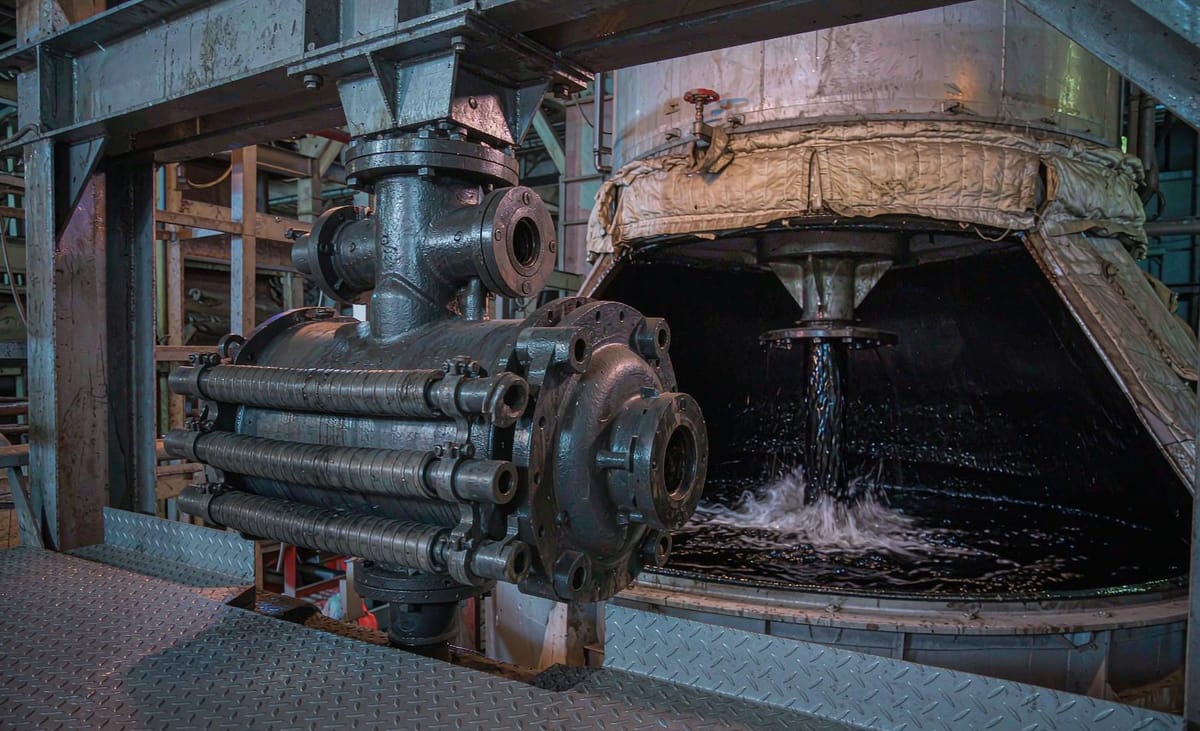
Bitumen and Asphalt Service: Jacketed Valves for Hot Heavy Media
Bitumen, asphalt, and heavy vacuum resid are the toughest ordinary fluids a valve can face. At storage temperature they behave like a solid; at handling temperature they flow, but reluctantly. Cool them slightly and viscosity climbs steeply; cool them further and they set solid in the line. Heat them too much and they crack, coke, and deposit carbon on every wetted surface. Valve selection for this service is therefore a heat- retention problem first and a mechanical problem second — and that is why the jacketed valve is the default answer across terminals, roofing plants, paving emulsion facilities, and refinery bottoms circuits.
What the Media Does to a Valve
Three properties drive the design:
- Extreme viscosity. At pumping temperature, bitumen is still orders of magnitude more viscous than fuel oil. Pressure drop across a reduced-bore valve, an obstructed cavity, or a sharp change of direction can be enough to choke the line.
- Solidification on heat loss. Bitumen is handled around 150–200 °C. A valve that sits idle, or an uninsulated body exposed to wind and rain, will cool locally until the product gels and then sets. A set plug of bitumen in a valve body can be nearly impossible to remelt without overheating the surrounding metal.
- Coking and fouling. Above safe film temperatures, the heavy hydrocarbon cracks and lays down hard carbon layers inside the body, around the seat, and in any stagnation zone. Coke deposits eventually jam closure members and destroy seating surfaces.
Add mineral filler abrasiveness in asphalt formulations and trace sulfur corrosion, and the service envelope is complete.
Full Jacket Versus Partial Jacket
Jacketing surrounds the valve body with a heated chamber so the product inside never touches a cold wall. Two levels of coverage exist, and choosing between them matters more than most specification sheets suggest.
Full jacketing encloses the entire body — flange faces, side walls, and usually the bonnet neck — so that every surface in contact with the product receives heat. Full jackets suit lines that sit idle for hours, product that sets readily, and terminals where a single frozen valve can shut down a loading bay. The jacket typically extends over the mating flanges of adjacent spool pieces so there is no cold ring at the connection.
Partial jacketing covers only the main body casting, leaving bonnet, flange rims, or bracket areas unheated. It is cheaper and adequate where the line runs continuously and short stops are warmed by flowing product, but it leaves cold spots. A partially jacketed valve on a batch loading line is a common root cause of bitumen setting in the seat area.
The jacket is itself a pressure part: it contains the heating medium, sees its own thermal expansion relative to the body, and its construction quality determines whether the valve can be rebuilt after years of cycling.
Jacket Connections and Heating Media
Two heating media dominate, and the connection details differ.
Steam jackets use plant steam condensed inside the jacket. Steam gives high, uniform heat transfer, but condensate drainage must be trapped and maintained — a waterlogged jacket is a cold jacket. Supply and condensate connections should be positioned so the jacket drains completely.
Thermal oil jackets circulate heat transfer fluid from a heater unit, allowing jacket temperatures well above what low-pressure steam delivers — suited to bitumen grades needing higher handling temperatures. Oil circuits need reliable circulation; a stagnant pocket will foul with degraded oil and lose output.
In either case, the jacket supply should be sized for the valve's surface area, not just its nominal size, and the jacket circuit should stay hot whenever the product line could be live — interlocked with the pumps rather than switched manually.
Flow Path Design: No Dead Ends, Full Bore
Inside the body, the rule is simple: nothing that holds product in a stagnation zone. Design features that separate a true bitumen-duty valve from a repurposed standard valve include:
- Full-bore through-conduit flow with streamlined transitions, so product never slows in the body.
- Cavity-free or cavity-relieved closure design. Ball valves for this service either use seated designs without a product-filled body cavity, or provide cavity relief into the flow path. A standard floating ball with a large cavity is a coke pot.
- Avoidance of pockets around seat rings, body drain bosses, and flange recesses where cooled product accumulates.
- Bubble-tight seating without scrapers or seals that coke, since soft polymer seats degrade quickly at bitumen temperatures — more on that below.
Gate and plug valve designs with tapered or parallel closures wipe the seats clean on every operation, which helps shed early coke layers. Ball valves with true full bores dominate where pigging or maximum flow is needed.
Insulation and Heat Loss Around the Valve
A jacketed valve with no insulation on the jacket wastes heat and invites local cooling. The jacket surface should be covered with removable insulation, and surrounding pipework insulated to the same standard; flange faces, bolting, and actuator brackets are the usual escape points. Outdoors in cold climates, the tracing duty must account for the extra exposed area a valve presents — a large body will pull the line temperature down locally even when the pipe is well traced.
Bypass, Flushing, and Warm-Up Operation
Operation around bitumen valves follows a warm-up discipline:
- Before operating a valve that has been closed and cooling, warm it through the jacket until the product inside can move. Cracking a cold valve open shears a set plug and tears seating surfaces.
- Bypass lines around main valves allow warm product to be circulated through the closed valve, keeping the body hot during short stops.
- Flush connections let the line be pushed with lighter oil or hot circulating fluid before long shutdowns, so that valves drain of heavy product rather than standing full.
A valve spec for this service should state which of these provisions each position needs, not assume operators will improvise.
Soft Seat Temperature Limits
Resilient seat materials have narrow windows in hot heavy service. Common polymers degrade at temperatures well below bitumen handling conditions; even temperature-capable fluoropolymers sit close to their limit near 200 °C and suffer against hot, heavy hydrocarbons over time. In practice, bitumen-duty valves rely on metal-to-metal seating, grease-sealed or injection-fitted designs, or soft seats only where product temperature and cleaning regime are verified compatible. Specifying a soft seat because it seals well on the test bench is a frequent and expensive mistake.
Maintenance and Coke Removal
Maintenance planning should assume coke:
- Provide access for steam-out or controlled heating of bodies before opening; never open a bitumen valve by force.
- Inspect seats and closure members for carbon build-up at every opportunity; early coke is removable, mature coke machines metal.
- Keep jacket circuits in the maintenance scope — check supply and condensate temperatures, and verify that jacket pressure parts remain sound.
- Lubricate stem and packing per schedule; a stiff stem on a hot, heavy line discourages the frequent operation that keeps seats clean.
- Spare seals, packing, and gasket sets should be held for every valve on critical loading and transfer lines, since rebuild turnaround drives terminal availability.
Selection Checklist
Before finalizing a valve for bitumen or asphalt service, confirm:
- Jacket coverage matches the operating pattern: full jacket for batch and idle-prone lines, partial only where flow is continuous.
- Heating medium and connection type match the plant's steam or thermal oil system.
- Flow path is full bore and pocket-free, with cavity-free closure design.
- Seat materials are compatible with actual product film temperature, not just line temperature.
- Body materials and bolting suit the product temperature and trace sulfur content.
- Bypass, flush, and warm-up provisions exist for the positions that need them.
- Insulation coverage over the jacket and flanges is specified as part of the supply.
Choosing with Manufacturer Support
Heavy hot media exposes the gap between a catalog valve and a purpose-built one quickly. An experienced manufacturer that produces the full valve range in-house — ball valves, control valves, gate valves, globe valves, check valves, strainers, knife gate valves, plug valves and butterfly valves — can propose jacketed designs matched to the plant's heating medium, review flow paths for pocket-free construction, and supply seat options qualified for the product temperature involved. Send the Valve Schedule or the key parameters for each position to the manufacturer's applications team for a per-line proposal.



